Mesh Networking & Resilient Communication
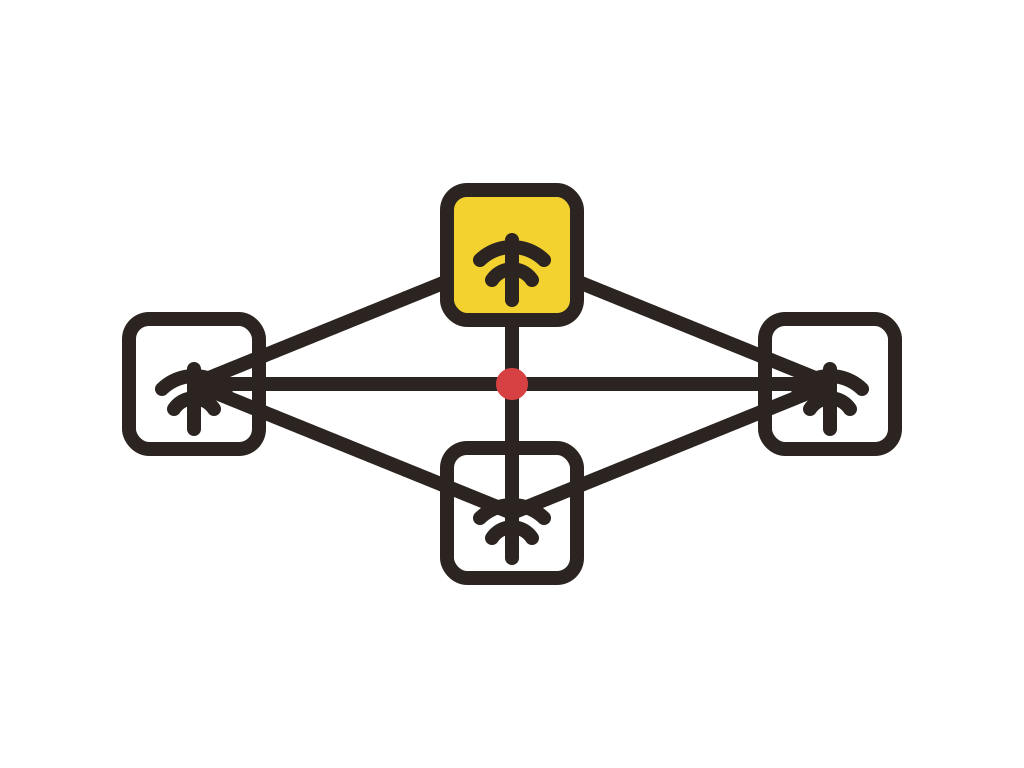
Based on the LoRa Mesh self-organizing protocol, build an off-grid emergency communication and sensor-data backhaul network with no public-network dependency and multi-hop relaying.
Core Hardware
- MP Meshtastic Emergency Communication Kit Self-Organizing Network Standard Training Kit · 4 T1000-E Card Terminals
- WT Wio Tracker L1 Pro Handheld Dev Terminal with Screen · Location Tracking & Firmware Customization
- SN Solar Node P1-Pro Solar-Powered Relay Base Station · Field Maintenance-Free · IPX6
- GW XIAO ESP32S3 & Wio-SX1262 LoRa-MQTT Gateway Node · Bridging Mesh & LAN
- SEN Grove BME280 Environmental Sensor · Temperature/Humidity & Barometric Pressure Collection
What This Module Solves
Scenarios such as field exploration, tunnel construction, and emergency search-and-rescue lack cellular base station coverage. Traditional walkie-talkies are limited by line-of-sight and cannot backhaul coordinates or sensor data. Single-point relay stations depend on mains power and high-elevation nodes; if damaged, the entire network goes down. Satellite phone terminals are expensive and suffer from obstruction blind spots, while ad-hoc private networks take long and cost much to deploy.
- Difficulty
- Advanced
- Duration
- L1 1 day / L2 2–3 days / L3 3–5 days
- Shortest Format
- 1 day (Taster Session · L1)
- Teaching Format
- 3 tiers: Taster / Workshop / Bootcamp
- Core Protocols
- LoRa / Meshtastic Mesh / MQTT
L1: able to use a smartphone and Bluetooth pairing, familiar with basic IoT concepts. L2: Node-RED or MQTT fundamentals, able to configure networks and Brokers. L3: proficient in C/C++ and PlatformIO, able to read and modify open-source firmware source code.
Typical Scenarios
Key Capabilities
- Build decentralized LoRa Mesh self-organizing networks
- Configure channel encryption and multi-hop relay routing
- Implement offline text communication and GPS coordinate backhaul
- Build a LoRa-MQTT gateway to bridge to the public network
- Orchestrate Node-RED situational monitoring and alert flows
- Customize Meshtastic on-device firmware and sensor integration
Course Hardware
This course revolves around "off-grid mesh terminals + solar autonomous nodes", all built on the Mission Pack ecosystem.
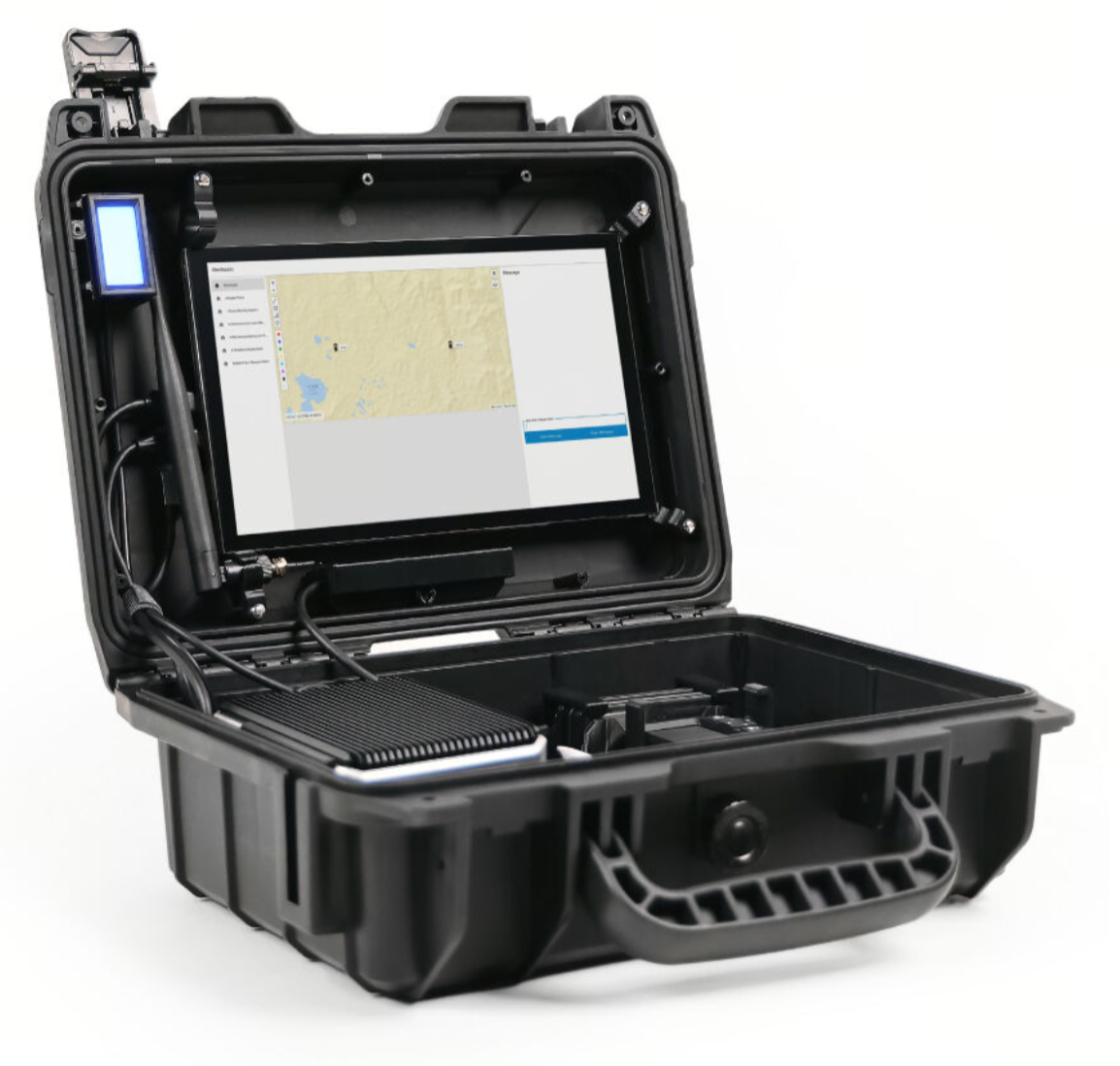
Meshtastic Emergency Communication Kit (Hazard Response Mission Pack, E2410180)
Standard self-organizing network training kit, includes 4 T1000-E card terminals and accessories
Standard training kit for decentralized offline text and location communication. Includes 4 SenseCAP T1000-E card-style tracking terminals, supports Bluetooth pairing and Meshtastic App configuration, suitable for L1 basic networking and offline communication experience. Terminals have built-in GPS and LoRa radio, auto-join the network on power-up, and support point-to-point and group broadcast.
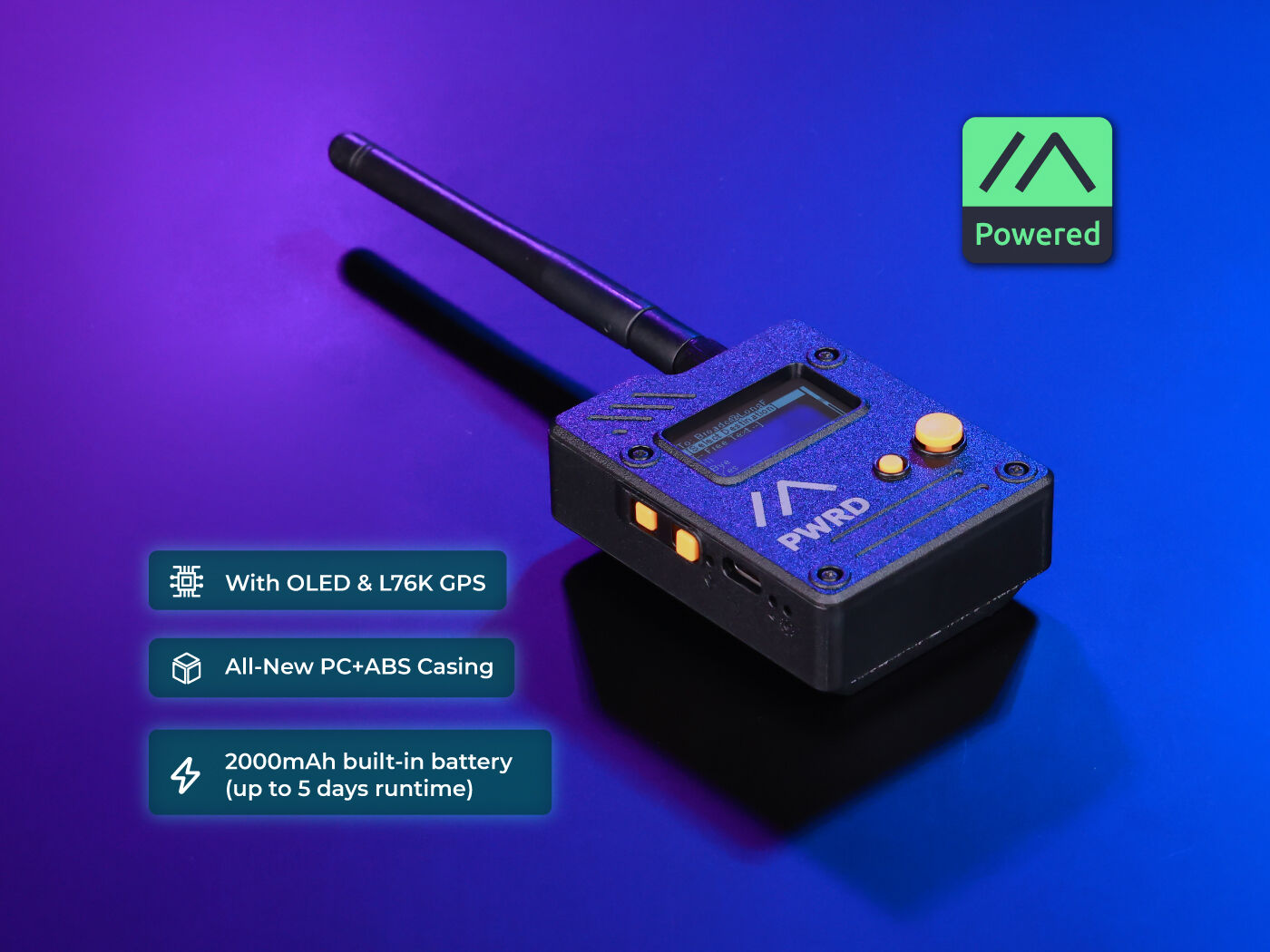
Wio Tracker Dev Board L1 Pro (114993649)
Handheld dev terminal with screen, supports location tracking and firmware customization
Handheld dev terminal with a 1.3" OLED screen, built-in GPS and 2000mAh battery. Suitable for L3 on-device firmware custom development, supports screen UI customization and I2C/UART sensor expansion. Compiles Meshtastic source code via PlatformIO, target board type seeed_wio_tracker_L1.
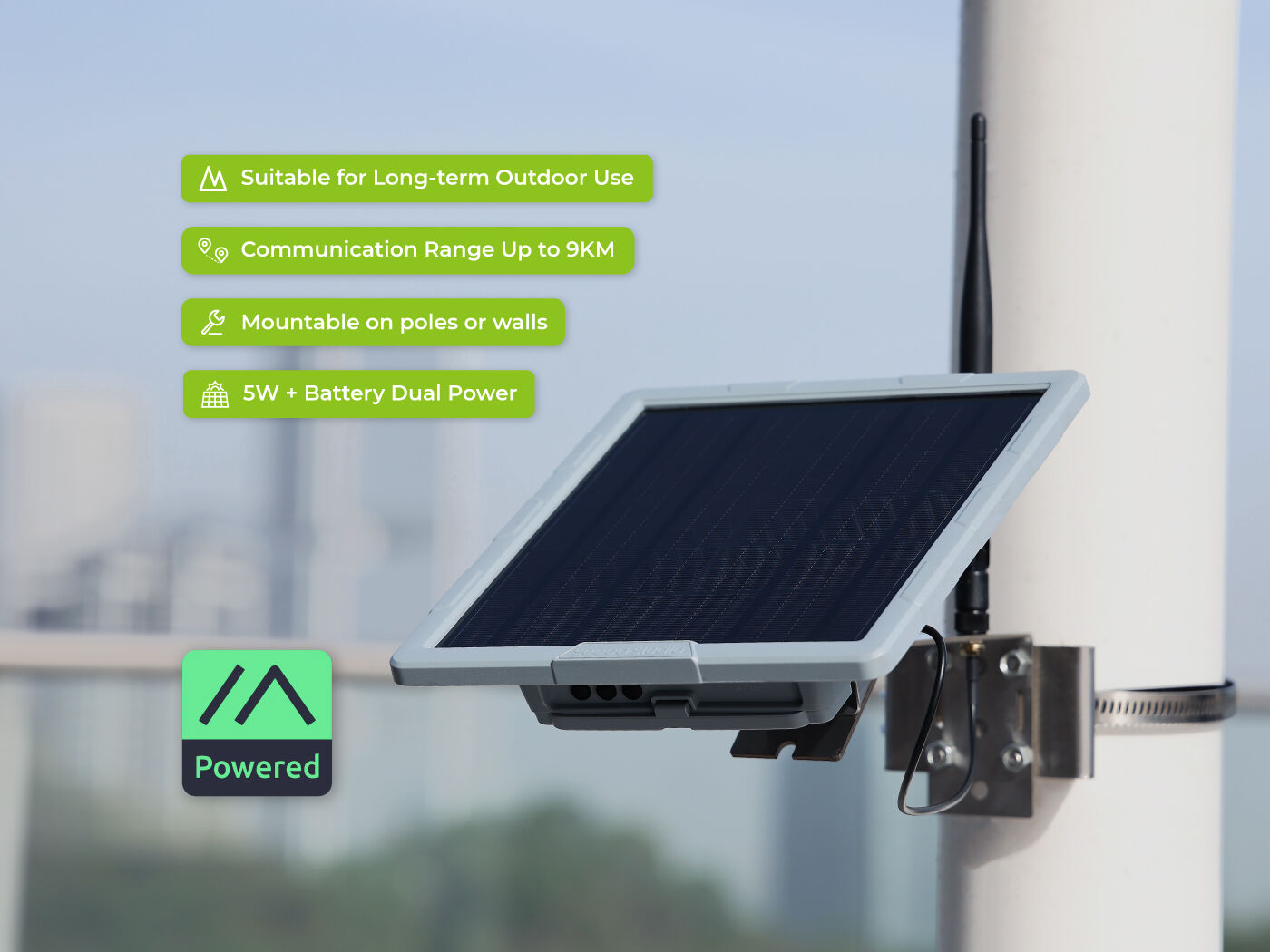
SenseCAP Meshtastic & LoRa Solar Node P1-Pro (114993633)
Field maintenance-free relay base station, solar self-powered
Outdoor solar self-powered relay node, IPX6 rated. Extends network coverage and hop count, suitable for long-term unattended field operation and high-elevation relay deployment. Supports automatic Meshtastic protocol relay forwarding, no mains power required.
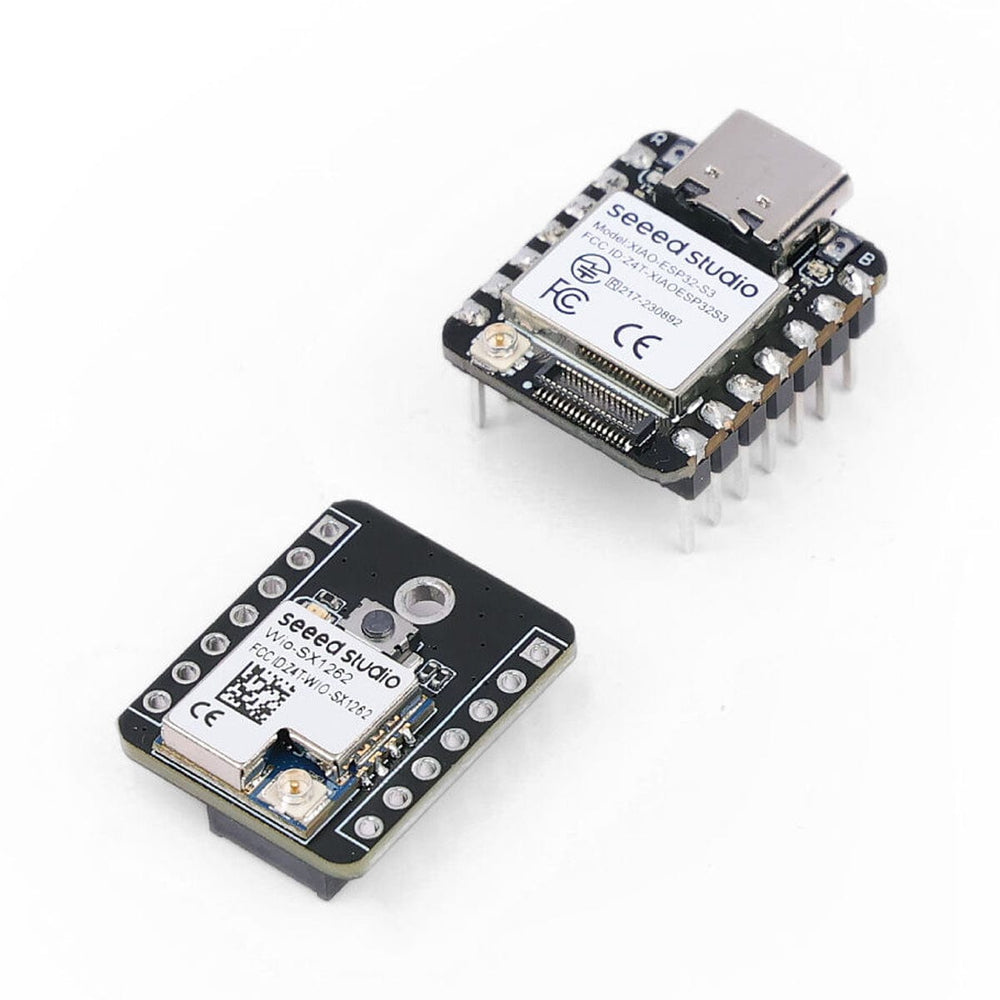
XIAO ESP32S3 & Wio-SX1262 Kit (102010611)
LoRa-MQTT gateway node, bridging Mesh and LAN
Gateway node pre-flashed with Meshtastic firmware at the factory. Bridges LoRa Mesh messages to the LAN MQTT Broker and monitoring dashboard, supports Wi-Fi connection, upstream data forwarding, and downstream command broadcast. Suitable for L2 public-network integration and situational monitoring.
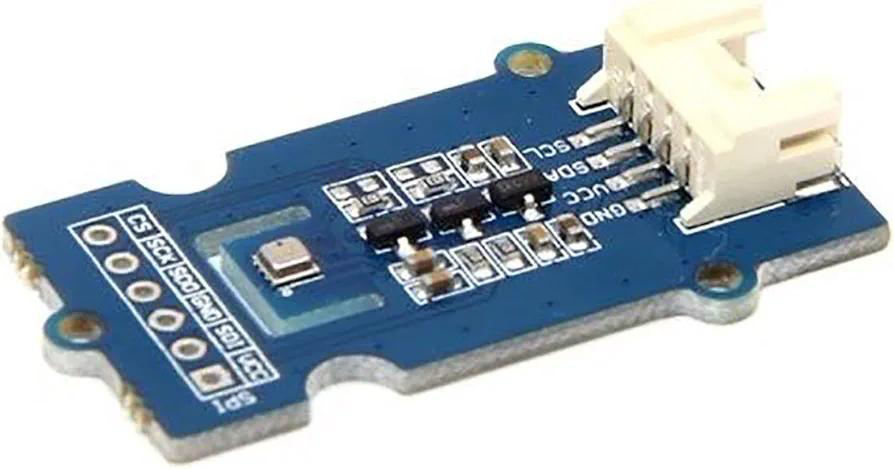
Grove BME280 Environmental Sensor (101020193)
High-precision temperature, humidity, and barometric pressure sensor
Connects to Wio Tracker L1 Pro via the Grove I2C interface, collecting temperature, humidity, and barometric pressure data. Injected as custom telemetry into the Mesh network, suitable for L3 off-grid environmental monitoring node development.
Additionally configured with Grove 4P cable (20cm, connecting BME280 to Wio Tracker L1 Pro), screen, integrated power design, router, and other common accessories.
Codecraft helps you dare to make, aily-blockly helps you finish it
M0 adopts dual-platform relay toolchain for zero-install, 5-minute results.
Meshtastic App + Firmware Configuration
Channel Encryption + Node Roles · Bluetooth/App-Driven
- Terminal Bluetooth Pairing
- Channel & PSK Configuration
- Multi-Node Networking & Offline Communication
Node-RED + MQTT
Visual Flow Orchestration · Mesh Data Parsing & Alerts
- LoRa-MQTT Gateway Setup
- Telemetry Message Parsing
- Situational Dashboard & SOS Alerts
PlatformIO + Meshtastic Source Code
C++ Embedded Compilation · On-Device Firmware Customization
- Source Code Clone & Board Configuration
- Sensor Integration & UI Customization
- Compilation, Flashing & On-Device Verification
Additionally requires EMQX/Mosquitto MQTT Broker (carrying Mesh message bridging) and Meshtastic Map (offline map situational dashboard).
Three-tier Progression: Demo → Consultant → Design
Basic Networking and Offline Communication
Own Your Emergency Communication Network, Exchange Messages and Share Locations in Network-Free Environments
- Understand LoRa physical characteristics and Meshtastic routing topology principles
- Proficiently configure node roles (Client / Repeater / Router) and channel encryption (256-bit AES PSK)
- Master terminal communication and map positioning in off-grid environments
- Complete on-site networking of at least 3 nodes, enabling point-to-point, group broadcast, and location sharing
Status Monitoring and MQTT Bridging
Achieve Field Off-Grid Sensor Monitoring, Automatically Collect Environmental Data and Anomaly Alerts
- Master MQTT bridging methods between LoRa Mesh and LAN/public network
- Master Node-RED-based Mesh telemetry data parsing and automation flow orchestration
- Capable of building a full-domain communication situational monitoring dashboard
- Complete deployment of one LoRa-MQTT gateway, with the dashboard displaying node coordinates and battery status in real time
Off-Grid Sensor Integration and Firmware Customization
Integrate Off-Grid Private Networks with the IoT Ecosystem, Enable Off-Grid Networks to Link with On-Site Devices
- Master the Meshtastic open-source firmware architecture and C++ source customization workflow
- Master PlatformIO-based embedded compilation and firmware flashing
- Capable of independently designing and building off-grid environmental monitoring nodes
- Complete custom firmware compilation and on-device verification for Wio Tracker L1 Pro with integrated BME280 environmental sensor
Curriculum / 13 teaching modules
Same module order, you choose the cut
Select a format to see which modules it covers.
| Module / Output | Taster1 day | Workshop2–3 days | Bootcamp3–5 days | ||
|---|---|---|---|---|---|
| 01 | Pre-class Preparation and Environment Pre-checkHardware bench inventory, frequency consistency verification (433/868/915 MHz), firmware pre-check and upgrade, field test line planning and group channel/PSK allocation | — | Full | Full | Full |
| 02 | LoRa Physical Layer & Mesh Protocol PrinciplesFrequency/bandwidth/spreading factor/coding rate parameter analysis, flooding routing (Managed Flooding), multi-hop counting and loop-prevention mechanisms | Meshtastic | Full | Full | Full |
| 03 | Terminal & Relay Node InitializationT1000-E card terminal Bluetooth pairing and App basic setup, Solar Node P1-Pro deployment specifications and antenna polarization direction | Meshtastic App | Full | Full | Full |
| 04 | Channel Planning & Security EncryptionMain channel and group sub-channel setup, 256-bit AES pre-shared key (PSK) configuration, achieving group security isolation | Meshtastic | Full | Full | Full |
| 05 | Offline Communication & Location Backhaul Field TestIndoor wall-penetration and line-of-sight point-to-point text send/receive testing, offline map tile loading, GPS location reporting and trajectory mapping hands-on | Meshtastic App | Full | Full | Full |
| 06 | ESP32S3 LoRa-MQTT Gateway SetupXIAO ESP32S3 + Wio-SX1262 gateway assembly, Wi-Fi connection and MQTT Broker access configuration, data upstream forwarding and downstream command broadcast | XIAO ESP32S3 / MQTT | None | Full | Full |
| 07 | Mesh Telemetry Data Parsing & Node-RED LinkageParse Meshtastic MQTT telemetry messages (default Protobuf, JSON output requires separate configuration), node status monitoring flow (battery/heartbeat), SOS alert linkage (Webhook/email/instant messaging) | Node-RED | None | Full | Full |
| 08 | Network Topology & Map Visualization DashboardDeploy Meshtastic Map or self-hosted map service, real-time display of node distribution, signal strength (RSSI/SNR) and relay link hop count | Meshtastic Map | None | Partial | Full |
| 09 | External Environmental Sensor Hardware DebuggingConnect BME280 temperature/humidity/barometric pressure sensor via Grove interface, I2C bus address scanning and sensor power management | Grove BME280 | None | None | Full |
| 10 | PlatformIO Development Environment & Source Code ProjectSet up VS Code + PlatformIO build environment, clone meshtastic/firmware official source code, configure platformio.ini target board type seeed_wio_tracker_L1 | PlatformIO | None | None | Full |
| 11 | On-Device Firmware Feature CustomizationModify screen UI interaction logic (add real-time environmental data and unread message count to home page), configure Telemetry data packaging and periodic sending strategy | C/C++ / Meshtastic Source Code | None | None | Full |
| 12 | Compilation, Flashing & On-Device VerificationCompile custom firmware and flash to Wio Tracker L1 Pro via USB/serial, verify sensor data multi-hop broadcast and parsing within the Mesh network | PlatformIO | None | None | Full |
| 13 | Solution Review and Delivery SummaryData retrospective on signal attenuation/relay hop count/packet loss rate in complex obstruction environments, emergency communication network deployment topology and frequency compliance specification archiving, hardware procurement list and spare parts recommendations | — | Partial | Full | Full |
● Full◐ Partial— None●+ Extended
The coverage key maps to course format IDs (taster / workshop / bootcamp), with values of full (complete coverage) / part (abbreviated coverage) / none (not included) / plus (deeper than full version). The taster session focuses on L1 basic networking and offline communication, excluding MQTT bridging and firmware customization; the workshop covers full L1+L2 gateway setup and situational monitoring; the bootcamp fully covers L1+L2+L3.
Pick the layer, then the format
Time and goals determine which layer to choose.
Taster Session
No FP1 day · 6–8h · L1 presentation layer · focusing on Meshtastic networking and offline communication
- Day 1 MorningModules 01 + 02 + 03
Environment Pre-Check → LoRa/Mesh Principles → Terminal & Relay Initialization
- Day 1 AfternoonModules 04 + 05 + 13 (abbreviated)
Channel Encryption → Offline Communication & Location Field Test → Summary Review
The taster session goal is "understand, explain, and demonstrate" — complete 3-node on-site networking and offline message/location sharing. Does not include MQTT bridging or firmware customization.
Hands-On Course
Full FP2–3 days · 14–20h · L1+L2 · Mesh networking + MQTT bridging + situational monitoring
- Day 1Modules 01–05
Environment Pre-Check → Principles → Terminal Initialization → Channel Encryption → Offline Communication Field Test
- Day 2Modules 06–08
MQTT Gateway Setup → Node-RED Data Parsing → Map Visualization Dashboard
- Day 3 (optional)Module 13
Solution Review and Delivery Summary
The workshop delivers one LoRa-MQTT gateway deployment, one situational monitoring dashboard, and at least one SOS alert linkage rule. Student prerequisite: Node-RED or MQTT fundamentals.
Delivery Course
Full FP3–5 days · 24–35h · L1+L2+L3 · full coverage including firmware customization and sensor integration
- Day 1–2Modules 01–08
Full L1+L2 content (networking + MQTT bridging + situational monitoring)
- Day 3Modules 09 + 10
BME280 Sensor Debugging → PlatformIO Environment Setup
- Day 4Module 11
On-Device Firmware Feature Customization Development
- Day 5Modules 12 + 13
Compilation, Flashing & On-Device Verification → Solution Review & Delivery Archiving
The bootcamp goal is the ability to independently develop off-grid sensor nodes. Student prerequisite: proficiency in C/C++ and PlatformIO.
The taster session is the standard format for solution demos and client communication: zero development barrier, 1-day closed loop, focusing on "devices can network, messages can be delivered." Suitable for exhibitions, technology open days, and initial client contact scenarios.
Workshop Day 3 is an optional flexible day: if students have a strong foundation, it can be compressed to 2 days (Day 2 afternoon merged with review); if more Node-RED tuning and dashboard customization time is needed, use the full 3 days.
All LoRa devices must use the same frequency band (433/868/915 MHz); mixing frequency bands will cause the physical layer to fail demodulation and networking. This course is only for overseas wireless frequency bands (EU868/US915, etc.) and must not be used for domestic frequency band applications.
When deploying Solar Node, attention must be paid to antenna vertical polarization direction and mounting height; communication distance is significantly affected by terrain undulation and building obstruction; message latency accumulates with hop count (typically 1–3 seconds/hop).
The taster session does not include MQTT bridging or firmware customization content. Do not promise clients that taster session students can independently complete LoRa-MQTT gateway setup — that is the workshop delivery standard.
Who This Course Is For
The value of this course is not in the hardware, but in the method of "connecting people and data in public-network-free environments"
M3 is not a course that teaches students to "play with walkie-talkies," but a methods course teaching teams how to use open-source Mesh protocols and lightweight hardware to build communication and data backhaul in the field without base stations or internet. What Chaihuo delivers is never just "one class session," but a complete set of things that can be taken apart, rewritten, and reassembled: 13-module course skeleton, teacher lesson plans and PPT, Meshtastic configuration templates, Node-RED example flows, PlatformIO build project, equipment inventory, and bench specifications.
Opening 01
Change the Scenario
The test scenario of Module 05 "Offline Communication & Location Backhaul Field Test" is open: your industry, your client site, a real problem happening in this city. Field exploration can be mining, forestry, or offshore operations — the closer the problem is to a real site, the better the effect, and you know this better than we do.
Opening 02
Connect Devices
Your existing client on-site sensors, environmental monitoring equipment on school training benches, and partner proprietary-protocol terminals can be connected after Module 09 to become the object pool for off-grid sensor integration practice. M3 is responsible for explaining the method thoroughly; what sensors to connect behind the door is up to you.
Opening 03
Add Your Own
What you have accumulated in the industry: field deployment experience, pitfalls encountered, the analogy that makes students instantly understand LoRa hop count, the three questions most commonly asked at client sites — those are precisely the parts we do not have and cannot provide.
The best destiny of a communication course is not to be executed in full once, but to be modified beyond recognition by an engineer and then become the solution that only he can deliver.
Scope Boundaries & Compliance
Core Principles
Only for overseas wireless frequency bands (EU868/US915, etc.), must not be used for domestic frequency band applications.
In Scope
- Short-Text Instant Messaging & Group Broadcast in Public-Network-Free Environments
- GPS Location Trajectory Backhaul & Offline Map Situational Mapping
- Multi-hop backhaul of lightweight sensor telemetry data (temperature/humidity, barometric pressure, etc.)
- Decentralized multi-hop relay network planning and deployment
- LoRa Mesh & Public-Network MQTT Bridging & Data Visualization (L2)
- On-Device Custom Development Based on Meshtastic Open-Source Firmware (L3)
Out of Scope
- Strictly prohibited for domestic wireless frequency band applications; the current kit frequency bands are 433/868/915 MHz (Meshtastic community bands), delivered only for overseas markets
- Limited by LoRa physical bandwidth (hundreds of bps to several kbps), does not support voice calls, real-time video, or large file transfer
- Not a complete replacement for cellular 4G/5G broadband communication
- Does not promise 100% message delivery rate in extremely complex electromagnetic interference environments
- Message transmission latency accumulates with relay hop count (typically 1–3 seconds/hop), not applicable to low-latency real-time control scenarios
- Network capacity is affected by air interface duty cycle and hop count; when there are too many nodes, channel parameters and reporting frequency must be properly planned