Device Connectivity & Smart Control
Based on Home Assistant and ESPHome, unify multi-protocol device access within a local area network to enable energy monitoring and automated orchestration.
Core Hardware
- GW reComputer R1125 / R1225 Industrial IoT Gateway · HA Hub Host
- MCU XIAO ESP32-C6 Wi-Fi 6 + BLE 5 Microcontroller · Sensor/Actuator Node
- RS485 XIAO RS485 Expansion Board Industrial Bus Bridge · Modbus RTU
- METER DDSU666 Smart Meter Single-Phase DIN-Rail · Circuit-Level Energy Metering
- SENSOR XY-MD02 Temperature & Humidity Transmitter Industrial-Grade · Modbus RTU Environmental Sensing
What This Module Solves
In commercial buildings, legacy facilities, hotels, apartments, and factory auxiliary workshops, subsystems such as HVAC, lighting, and security operate independently. Operations staff must switch between multiple platforms while data remains siloed. Without circuit-level energy metering, only total utility bills are visible, making it impossible to pinpoint high-consumption devices and waste periods. Traditional BA systems use proprietary closed protocols; device expansion and replacement depend on the original vendor, resulting in high retrofit costs and long cycles.
- Difficulty
- Beginner
- Duration
- 2 Days
- Shortest Format
- 1 day (Taster Session · L1)
- Teaching Format
- 3 tiers: Taster / Workshop / Bootcamp
- Core Protocols
- Modbus RTU / MQTT / Wi-Fi / Zigbee
None
Typical Scenarios
Key Capabilities
- Unified access and management of multi-protocol devices
- Circuit-level energy metering and monitoring dashboard construction
- Cross-device automation orchestration with YAML and Node-RED
- Third-party system API/MQTT integration
- System backup and disaster recovery
Course Hardware
The core teaching hardware of this course, built around a "unified control hub + multi-protocol access".
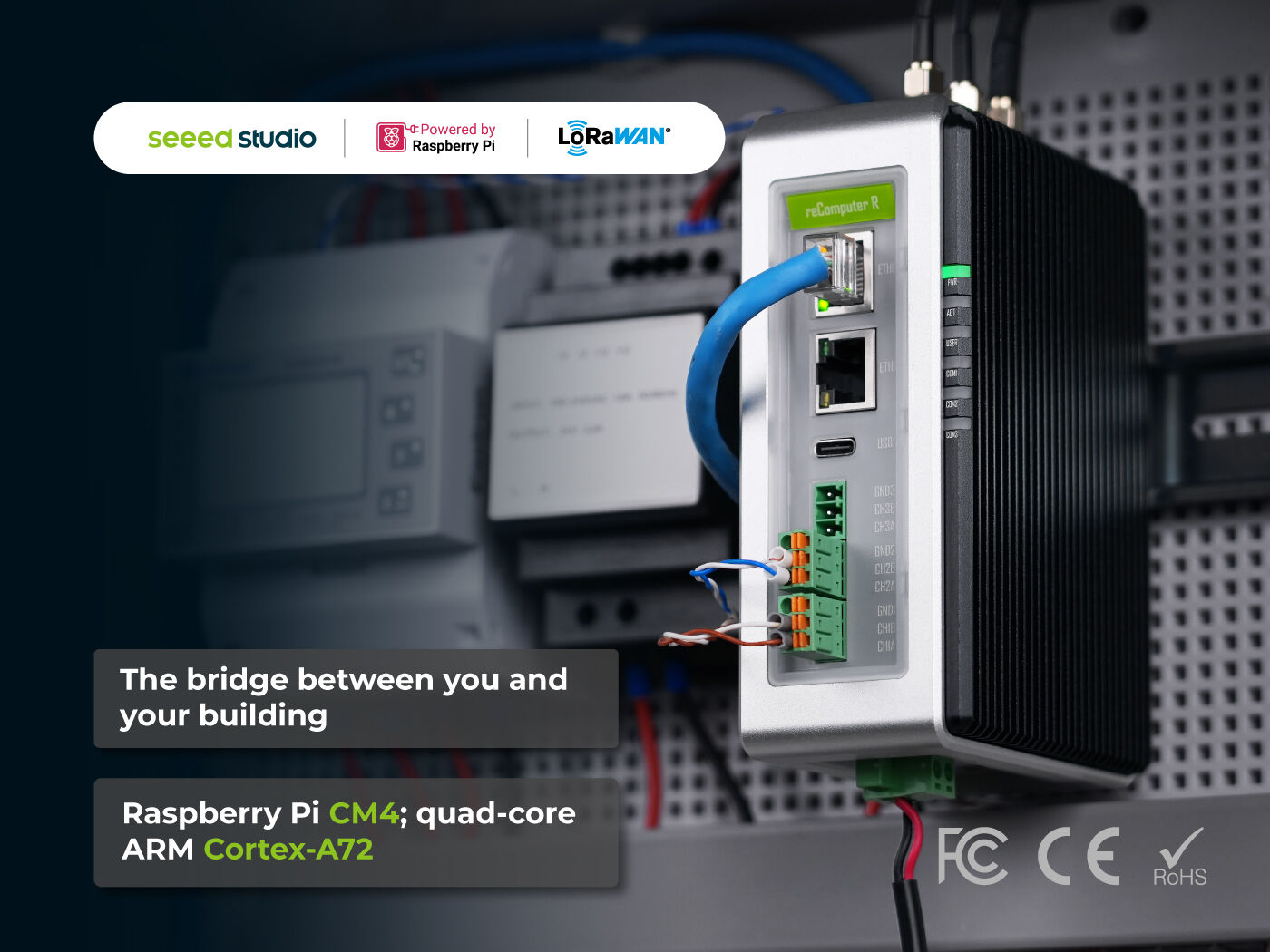
reComputer R1125 / R1225 Industrial IoT Gateway
On-site hub host running the Home Assistant platform and energy dashboard
Domestic version R1125, overseas LoRa version R1225. As a LAN edge hub, it centrally manages multi-protocol devices and hosts energy monitoring and automation logic.
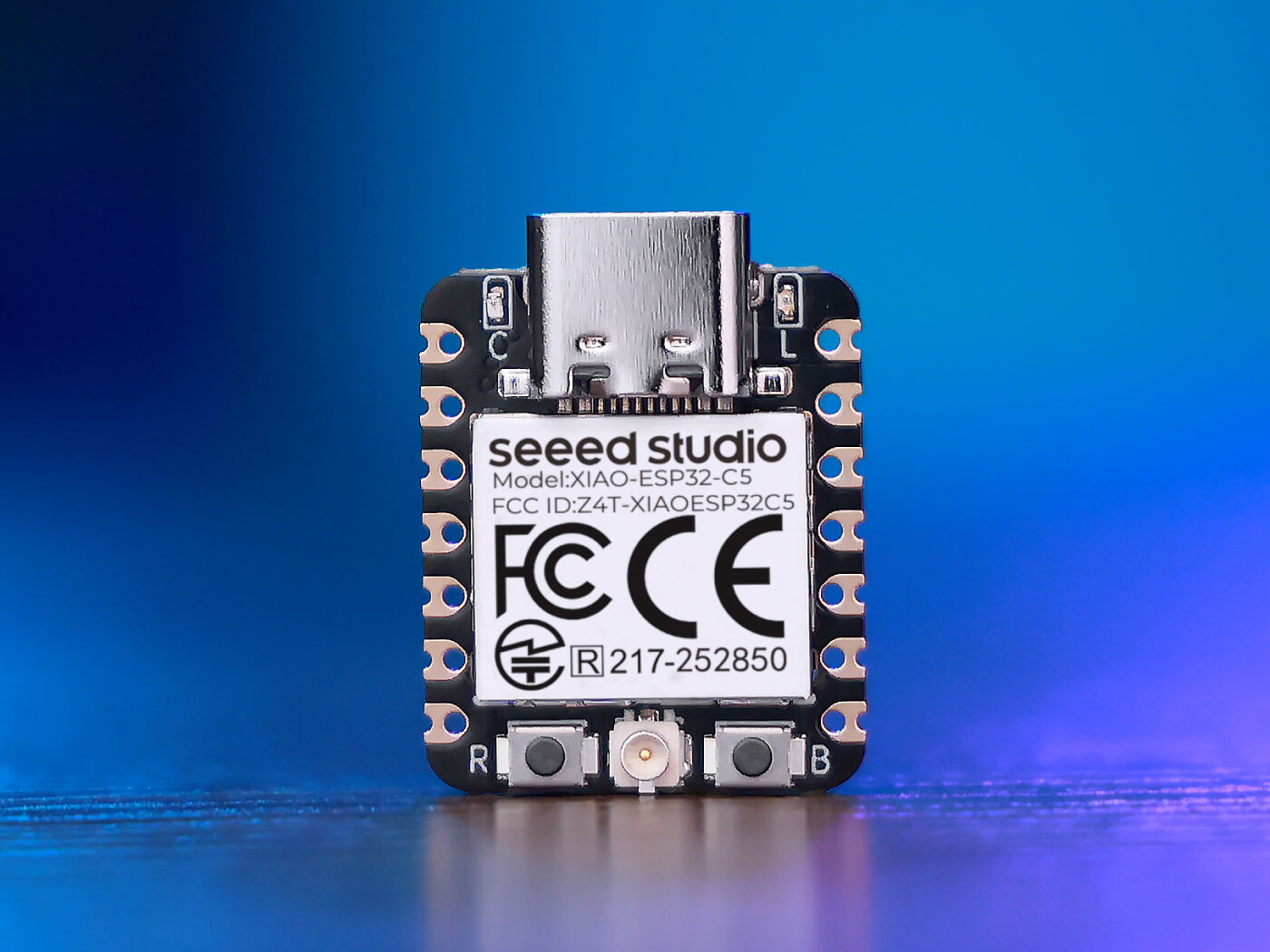
XIAO ESP32-C6 Development Board
Dual-band Wi-Fi 6 + BLE 5 microcontroller main controller
Used respectively for LED-strip control nodes, RS485 communication nodes, and backup nodes. Sensor acquisition and actuator control are implemented via ESPHome firmware configuration, with OTA management support.
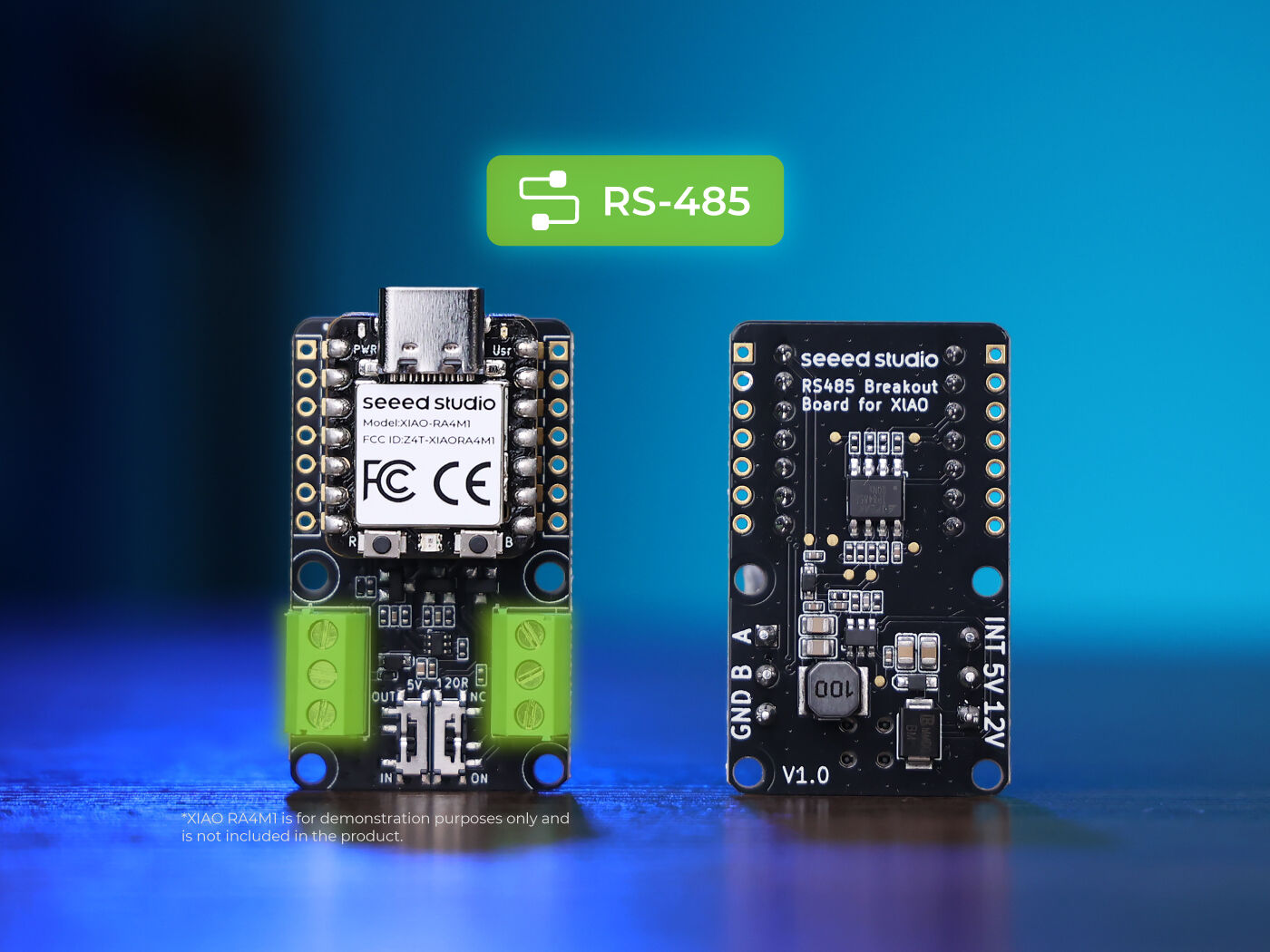
XIAO RS485 Expansion Board
Expands the XIAO dev board with an industrial RS485 interface
Connects temperature/humidity transmitters and meters, supports Modbus RTU register reading, serving as bridge hardware between consumer-grade controllers and industrial buses.
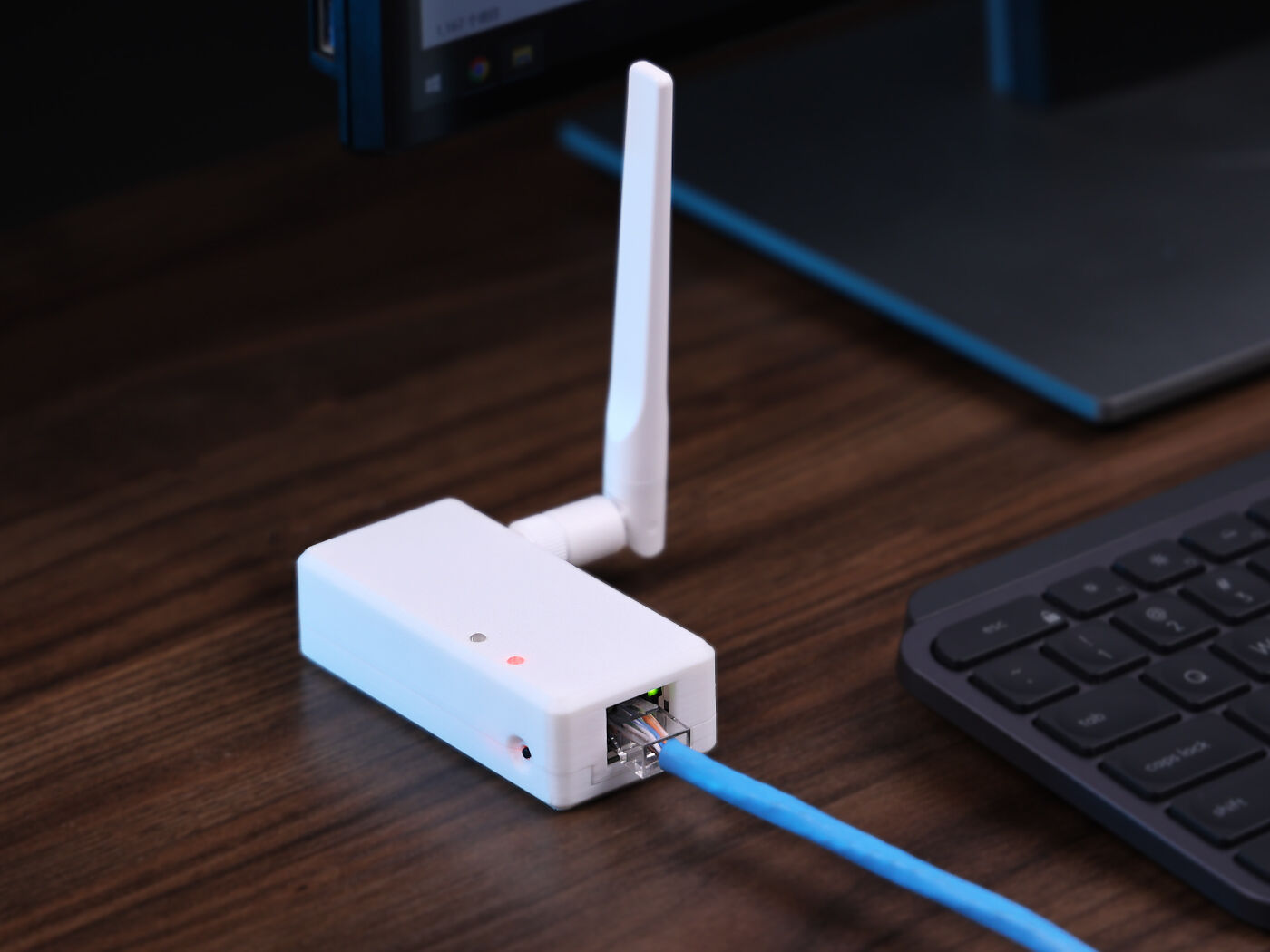
XIAO W5500 Ethernet Development Kit (PoE Bluetooth Proxy Gateway)
Wiring-free Bluetooth gateway, receives BLE device broadcasts and connects to the platform
Wired-network Bluetooth proxy gateway powered by PoE, captures data from BLE broadcast devices such as Mi Home Bluetooth thermometers, backhauls to Home Assistant via wired network, solving the limited Bluetooth signal coverage problem.
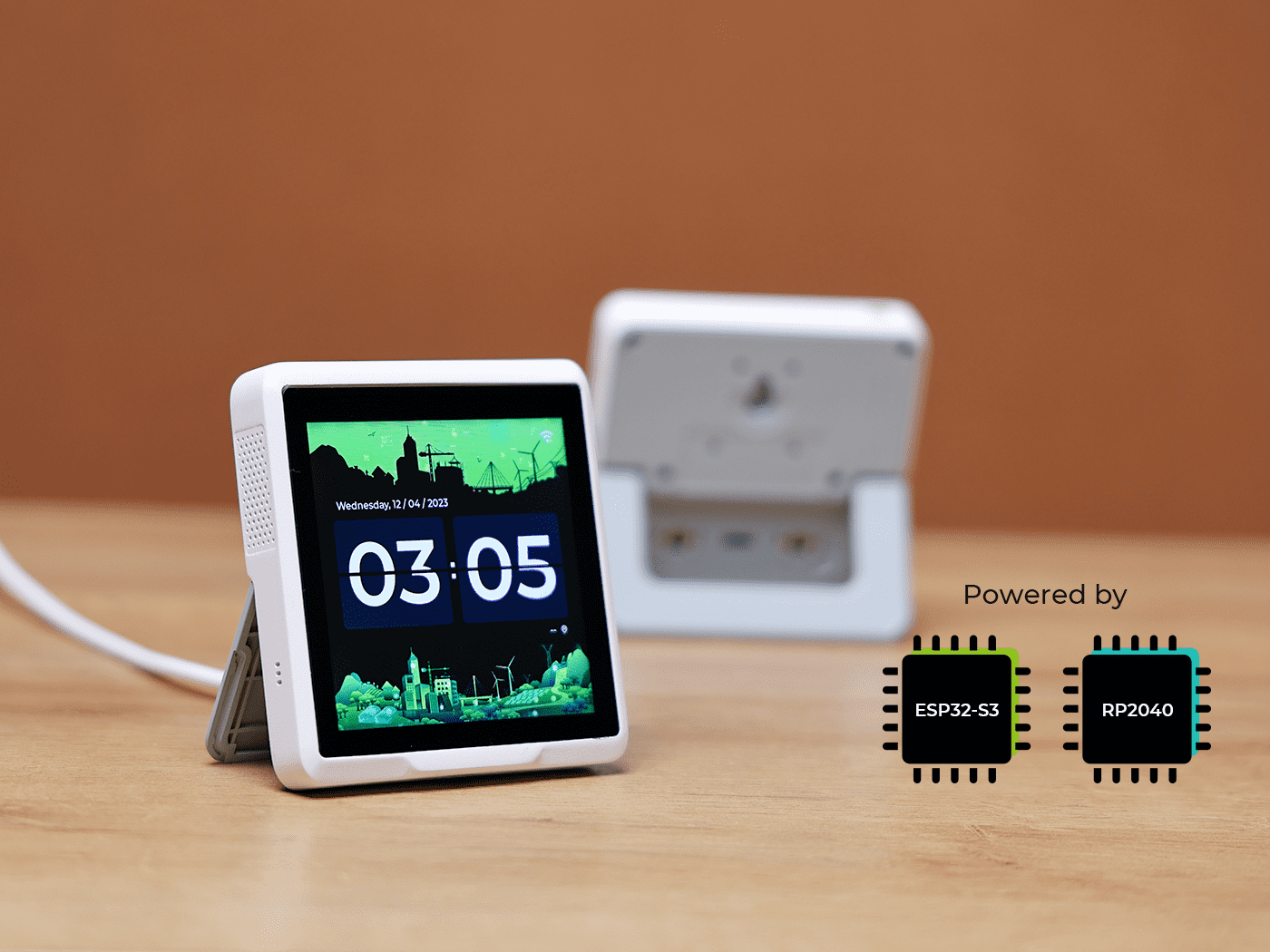
SenseCAP Indicator 4-Inch RGB Touchscreen
Desktop touch hub, displaying environmental parameters and device quick controls
4-inch RGB touch display, serving as a local HMI interface that displays environmental parameters and device status in real time and provides quick control entry, suitable for lightweight deployment scenarios without an external monitor.
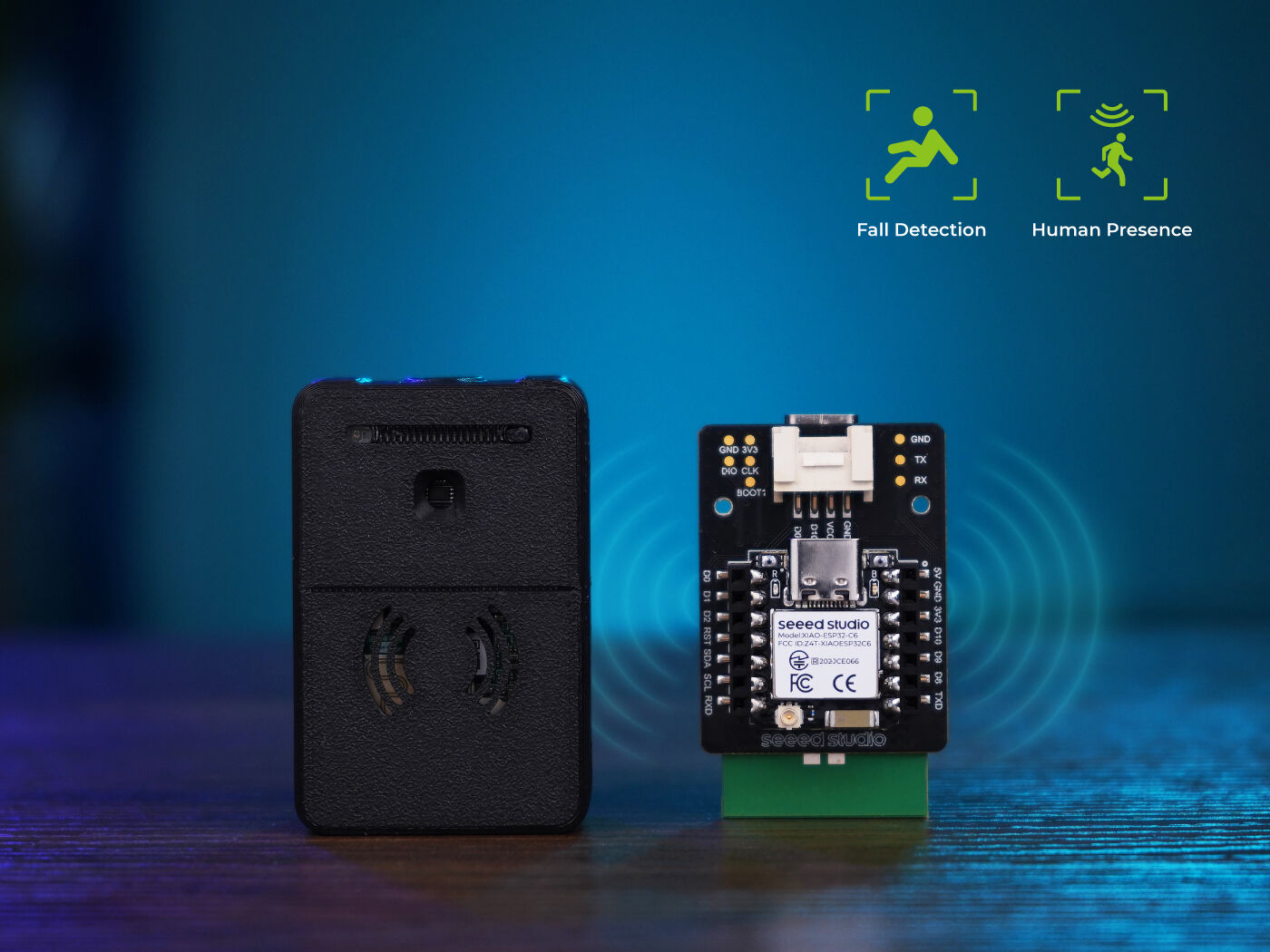
60GHz mmWave Human Presence & Fall Detection Module
Human micro-motion sensing and fall monitoring, linked to alert automation
60GHz mmWave radar module (MR60FDA2), detects human presence, micro-motion, and fall posture, privacy-friendly (no image capture); triggers occupancy linkage and anomaly alerts after connecting to HA via ESPHome.
Additionally configured with DDSU666 single-phase DIN-rail smart meter, XY-MD02 industrial temperature/humidity transmitter (required, no standalone illustration), screen, integrated power design, router, and other common accessories.
Codecraft helps you dare to make, aily-blockly helps you finish it
M0 adopts dual-platform relay toolchain for zero-install, 5-minute results.
ESPHome + HA OS
Firmware Configuration + Unified Platform · YAML-Driven
- Device Firmware Flashing
- Multi-Protocol Access
- Dashboards & Basic Automation
Node-RED + API/MQTT
Visual Flow Orchestration · Third-Party System Integration
- REST API/MQTT Integration
- Complex Business Flow Orchestration
- Backup & Disaster Recovery
Additionally requires EMQX/Mosquitto MQTT Broker (carrying multi-node asynchronous messages) and HACS (community integrations and frontend theme extensions).
Three-tier Progression: Demo → Consultant → Design
Platform Introduction and Basic Device Integration
Centrally manage devices of all brands in one panel, break free from expensive commercial software licenses
- Understand the basic Home Assistant architecture and core concepts (entities, services, states, automations)
- Master ESPHome firmware configuration and the XIAO ESP32-C6 sensor integration workflow
- Configure cards in the Lovelace dashboard and perform status monitoring
Industrial Bus Integration and Scenario Automation
Integrate existing industrial equipment, view real-time data directly and enable cross-device orchestration
- Master Modbus RTU protocol wiring, debugging, and YAML register configuration
- Independently build a complete energy metering and monitoring dashboard
- Master multi-condition automation orchestration and anomaly alert configuration
Business Integration and System Operations
Own a dedicated smart-building monitoring dashboard, with core data kept entirely on-premises
- Master data integration methods between HA and external management systems (REST API/MQTT/Webhook)
- Orchestrate complex business flows using Node-RED
- Capable of independently delivering maintainable systems and performing disaster backups
Curriculum / 13 teaching modules
Same module order, you choose the cut
Select a format to see which modules it covers.
| Module / Output | Taster1 day | Workshop2–3 days | Bootcamp3–5 days | ||
|---|---|---|---|---|---|
| 01 | Pre-class Preparation and Environment Pre-checkHardware bench inventory, network environment configuration, gateway firmware pre-flashing, teaching material distribution | — | Full | Full | Full |
| 02 | HA Platform Architecture & Core ConceptsEntity, Service, State, Automation, Lovelace dashboard basic configuration | Home Assistant OS | Full | Full | Full |
| 03 | Consumer-Grade Smart Hardware IntegrationStandard Wi-Fi/Zigbee smart plug and lighting device integration workflow, device state sync and manual control | Home Assistant | Full | Full | Full |
| 04 | XIAO ESP32 + ESPHome Sensor NodeWrite temperature/humidity acquisition config in ESPHome, online firmware compilation and flashing, HA auto-discovery and entity mapping | ESPHome | Full | Full | Full |
| 05 | HA Energy Dashboard IntroductionEnergy dashboard configuration structure and data flow, understand the basic framework of energy monitoring | HA Energy | Partial | Full | Full |
| 06 | Modbus RTU Protocol & RS485 WiringRS485 differential bus wiring standards, baud rate/data bits/parity/slave address configuration, register types and data parsing | ESPHome Modbus | None | Full | Full |
| 07 | Industrial Sensor & Meter IntegrationXIAO RS485 expansion board reads XY-MD02 temperature/humidity transmitter, integrates DDSU666 meter to read voltage/current/power/cumulative energy | ESPHome + RS485 | None | Full | Full |
| 08 | Energy Monitoring Dashboard ConstructionConfigure HA Energy module to bind meter cumulative energy entity, achieve real-time power curve and time-of-use energy statistics | HA Energy | None | Full | Full |
| 09 | Scenario Automation Strategy ConfigurationMulti-condition linkage rules: start fan when temperature exceeds limit, turn on lights when illumination falls below threshold, abnormal power consumption alert during non-working hours | HA Automation / YAML | None | Full | Full |
| 10 | Third-party system API/MQTT integrationHA REST API/WebSocket authentication (Long-Lived Access Token), MQTT publish/subscribe (EMQX Broker), Webhook external triggering | REST API / MQTT | None | None | Full |
| 11 | Node-RED Business Logic DevelopmentInstall and configure Node-RED Add-on, orchestrate complex branching logic, scheduled polling and external system data forwarding | Node-RED | None | None | Full |
| 12 | System backup and disaster recoveryAutomated backup strategy configuration (local backup and network mount), disaster recovery process verification and system migration drill | HA Backup | None | Partial | Full |
| 13 | Solution Review and Delivery SummaryGroup project solution rehearsal and configuration review, field bus stability and network topology retrospective, delivery documentation and configuration archiving | — | Partial | Full | Full |
● Full◐ Partial— None●+ Extended
The coverage key maps to course format IDs (taster / workshop / bootcamp), with values of full (complete coverage) / part (abbreviated coverage) / none (not included) / plus (deeper than full version). The taster session focuses on L1 platform access and sensor nodes, excluding industrial bus and business integration; the workshop covers full L1+L2 industrial bus and energy dashboards; the bootcamp fully covers L1+L2+L3.
Pick the layer, then the format
Time and goals determine which layer to choose.
Taster Session
No FP1 day · 6–8h · L1 presentation layer · focusing on platform access and sensor nodes
- Day 1 MorningModules 01 + 02 + 03
Environment pre-check → HA architecture concepts → Consumer-grade device integration
- Day 1 AfternoonModules 04 + 05 + 13 (abbreviated)
XIAO sensor node → Energy dashboard introduction → Summary review
The taster session goal is "understand, explain, and demonstrate" — achieve the demo effect of device integration and status monitoring in 3 minutes. Does not include industrial bus or business integration.
Hands-On Course
Full FP2–3 days · 14–20h · L1+L2 · industrial bus integration + energy dashboard + automation linkage
- Day 1Modules 01–05
Environment pre-check → HA architecture → Consumer-grade integration → XIAO node → Energy dashboard introduction
- Day 2Modules 06–09
Modbus protocol wiring → Industrial sensor & meter integration → Energy dashboard construction → Automation strategy configuration
- Day 3 (optional)Modules 12 (abbreviated) + 13
System backup basics → Solution review and delivery summary
The workshop delivers 1 Modbus device/meter integration, 1 real-time energy dashboard, and at least 2 sets of automation linkage rules. Student prerequisite: ability to read YAML configuration files.
Delivery Course
Full FP3–5 days · 24–35h · L1+L2+L3 · full coverage including cross-system integration and disaster recovery
- Day 1–2Modules 01–09
Full L1+L2 content (platform access + industrial bus + energy dashboard + automation)
- Day 3Module 10
Third-Party System API/MQTT Integration Hands-On
- Day 4Module 11
Node-RED Complex Business Flow Development
- Day 5Modules 12 + 13
System backup and disaster recovery drill → Solution review and delivery archiving
The bootcamp goal is the ability to independently deliver maintainable systems. Student prerequisite: YAML/Node-RED and networking fundamentals, familiarity with L1–L2 competencies.
The taster session is the standard format for solution demos and client communication: zero industrial wiring barrier, 1-day closed loop, focusing on "devices can connect, data can be seen." Suitable for exhibitions, technology open days, and initial client contact scenarios.
Workshop Day 3 is an optional flexible day: if students have a strong foundation, it can be compressed to 2 days (Day 2 afternoon merged with backup and review); if more automation tuning time is needed, use the full 3 days.
DDSU666 meter wiring involves AC 220V high-voltage circuits; instructors or certified electricians must complete the incoming and load wiring, and students only operate the RS485 communication side. Students are strictly prohibited from plugging/unplugging high-voltage terminals on their own.
RS485 bus wiring requires attention to A/B wire order and termination resistor matching; when bus length exceeds 10 meters, a 120Ω termination resistor is recommended at the end, otherwise communication packet loss or register read failures may occur.
The taster session does not include industrial bus content. Do not promise clients that taster session students can independently complete Modbus device integration — that is the workshop delivery standard.
Who This Course Is For
The value of this course is not in the hardware, but in the method of "integrating existing equipment"
M1 is not a course that teaches students to "play with smart home," but a methods course teaching teams how to use open-source platforms and lightweight hardware to centrally integrate already-existing, siloed devices on site. What Chaihuo delivers is never just "one class session," but a complete set of things that can be taken apart, rewritten, and reassembled: 13-module course skeleton, teacher lesson plans and PPT, ESPHome example configurations, YAML templates, Modbus register mapping tools, equipment inventory, and bench specifications.
Opening 01
Change the Scenario
The linkage rules of Module 09 "Scenario Automation Strategy Configuration" are open: your industry, your client site, a real problem happening in this city. Temperature exceeding limits can be a server room, a cold storage, or an aquaculture greenhouse — the closer the problem is to a real site, the better the effect, and you know this better than we do.
Opening 02
Connect Devices
Your existing client legacy equipment, sensors on school training benches, and partner proprietary-protocol devices can be connected after Module 06 to become the object pool for Modbus integration practice. M1 is responsible for explaining the method thoroughly; what devices to connect behind the door is up to you.
Opening 03
Add Your Own
What you have accumulated in the industry: wiring experience, pitfalls encountered, the analogy that makes students instantly understand Modbus, the three questions most commonly asked at client sites — those are precisely the parts we do not have and cannot provide.
The best destiny of an integration course is not to be executed in full once, but to be modified beyond recognition by an engineer and then become the solution that only he can deliver.
Scope Boundaries & Compliance
Core Principles
Only one-way status monitoring, no reverse control execution.
In Scope
- Cross-brand device status aggregation and unified monitoring dashboard
- Circuit-level energy metering and time-of-use energy statistics
- Environmental parameter (temperature/humidity, illumination, human presence) monitoring and threshold alerts
- Automation linkage for non-safety-critical systems (lighting, fans, sockets and other low-voltage actuators)
- Third-party system data integration (REST API / MQTT / Webhook one-way data pass-through)
Out of Scope
- Strictly prohibited from intervening in safety-critical life systems such as fire protection, elevator control, and high-voltage power distribution
- Strictly prohibited from extending to direct on/off control of high-voltage high-current circuits and safety braking systems
- Does not replace statutory fire protection systems and elevator safety protection systems
- Does not promise specific energy-saving percentages for particular scenarios (energy-saving effects are affected by on-site equipment, usage habits, and climate conditions)
- Does not include long-term on-site outsourced operations and maintenance services
- Control scenarios are limited to low-voltage DC actuators (LED strips, 5V/12V relay modules, etc.); controlling AC 220V and above high-voltage loads through this system is strictly prohibited