Environmental Sensing & Data Acquisition
Industrial-grade sensors with dual 4G/LoRaWAN links enable low-power environmental monitoring and data acquisition in wide-area scenarios.
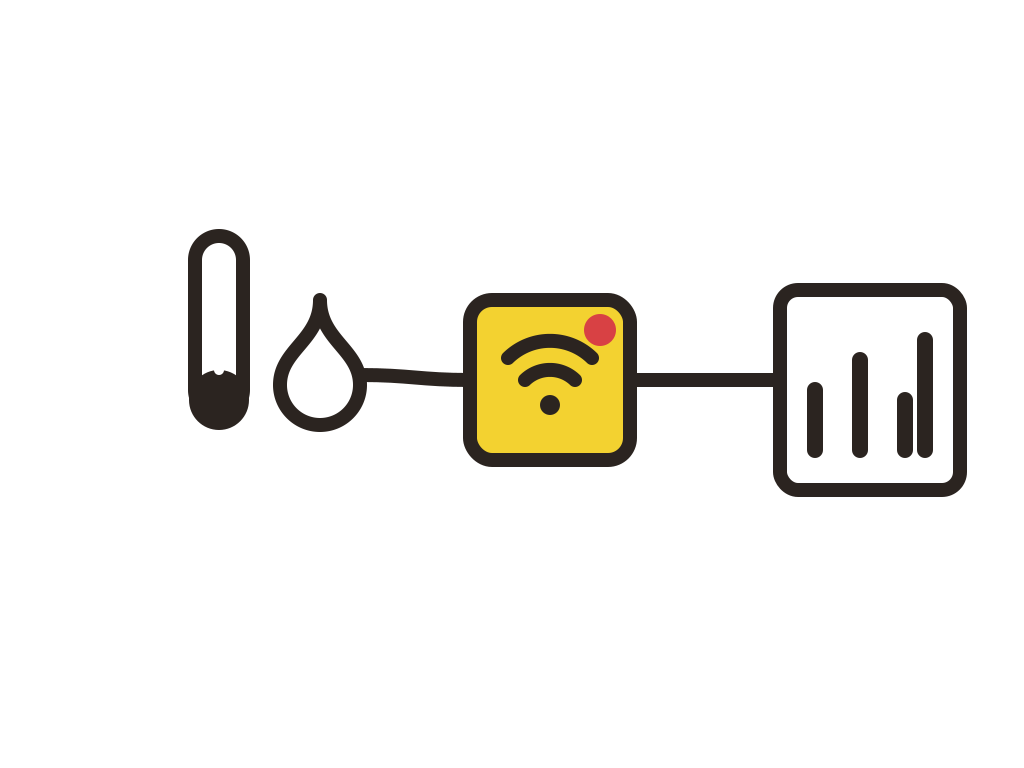
Core Hardware
- DTU 4G Multi-Channel Data Logger (114992169) 4-Channel RS485 Industrial Data Logger · 4G Cellular Reporting
- WEATHER 7-in-1 Weather Environmental Sensor (101991050) Ultrasonic Wind Speed/Direction / Radar Rainfall · RS485
- AGRI Yunxiaoguo Multi-Parameter Agricultural Monitor (114993122) Temperature/Humidity/Light/CO2 Integrated · RS485
- SOIL 4G Soil Moisture Monitor (114993646) Tube-Type Multi-Layer Soil Monitoring · 4G + Solar
- EDGE reComputer R1025-10(113991274) Edge Automation Host · Node-RED/API
What This Module Solves
For widely dispersed scenarios such as multi-span greenhouses, protected horticulture, river water-quality monitoring, urban flood-prone points, and industrial warehouses, remote sites incur high wiring and power-supply costs, and laying cables across hundreds of meters to several kilometers in mountainous terrain or river cross-sections is a massive undertaking. On-site multi-vendor sensors each define proprietary protocols, leading to long secondary-development and protocol-adaptation cycles. Anomalies such as frost, water-quality deterioration, and soil drought rely on manual periodic inspection, resulting in late fault detection and high labor costs. Collected environmental data remains on cloud dashboards or mobile apps, unable to link with existing actuators such as irrigation/fans, nor integrate with third-party business systems.
- Difficulty
- Beginner
- Duration
- 2 Days
- Shortest Format
- 1 day (Taster Session · L1)
- Teaching Format
- 3 tiers: Taster / Workshop / Bootcamp
- Core Protocols
- Modbus RTU / RS485 / LoRaWAN / 4G Full-Network
- Dual Communication Routes
- 4G Cellular Direct Version (Domestic) / LoRaWAN Wide-Area Version (Overseas, Wiring-Free)
None
Typical Scenarios
Key Capabilities
- Multi-environmental-parameter acquisition (soil/weather/gas/water quality)
- Wireless wide-area transmission (4G cellular direct / LoRaWAN)
- Cloud reporting and multi-condition alert configuration
- SenseCAP Open API data integration and extraction
- Node-RED local threshold linkage control orchestration
- Time-series database storage and Grafana private dashboard
Course Hardware
This course centers on "4G data acquisition + a range of sensing terminals", covering sensing and collection from farmland and weather stations to industrial parks.
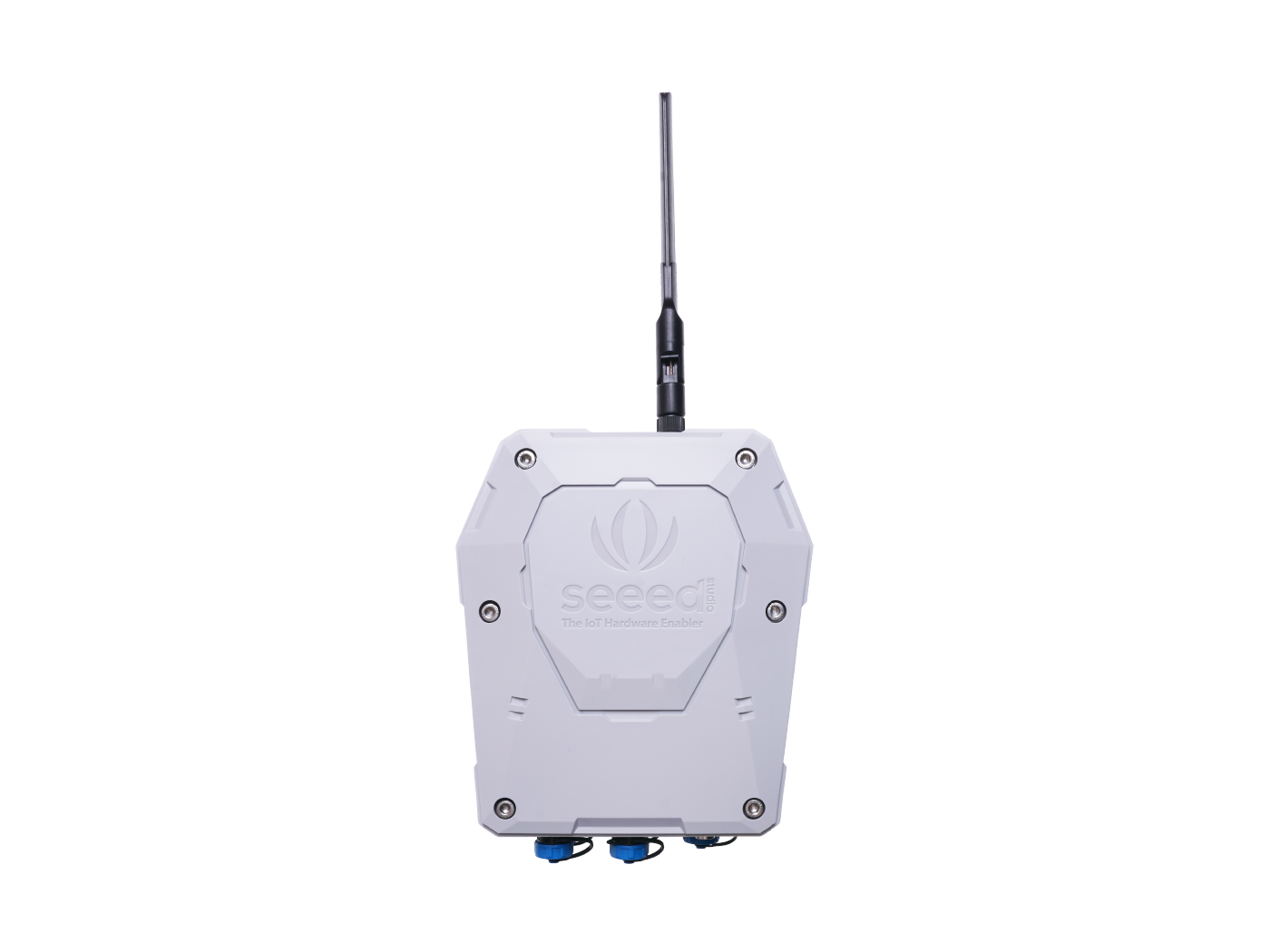
4G Multi-Channel Data Logger (114992169)
4-channel RS485 industrial data logger, reports to cloud via 4G
Data acquisition hub, supports 4 RS485 channels, expandable to up to 32 sensors via a splitter; 4G cellular full-network direct connection, plug-and-play with SIM card, standard Modbus RTU protocol, powered by 12V/2A adapter.
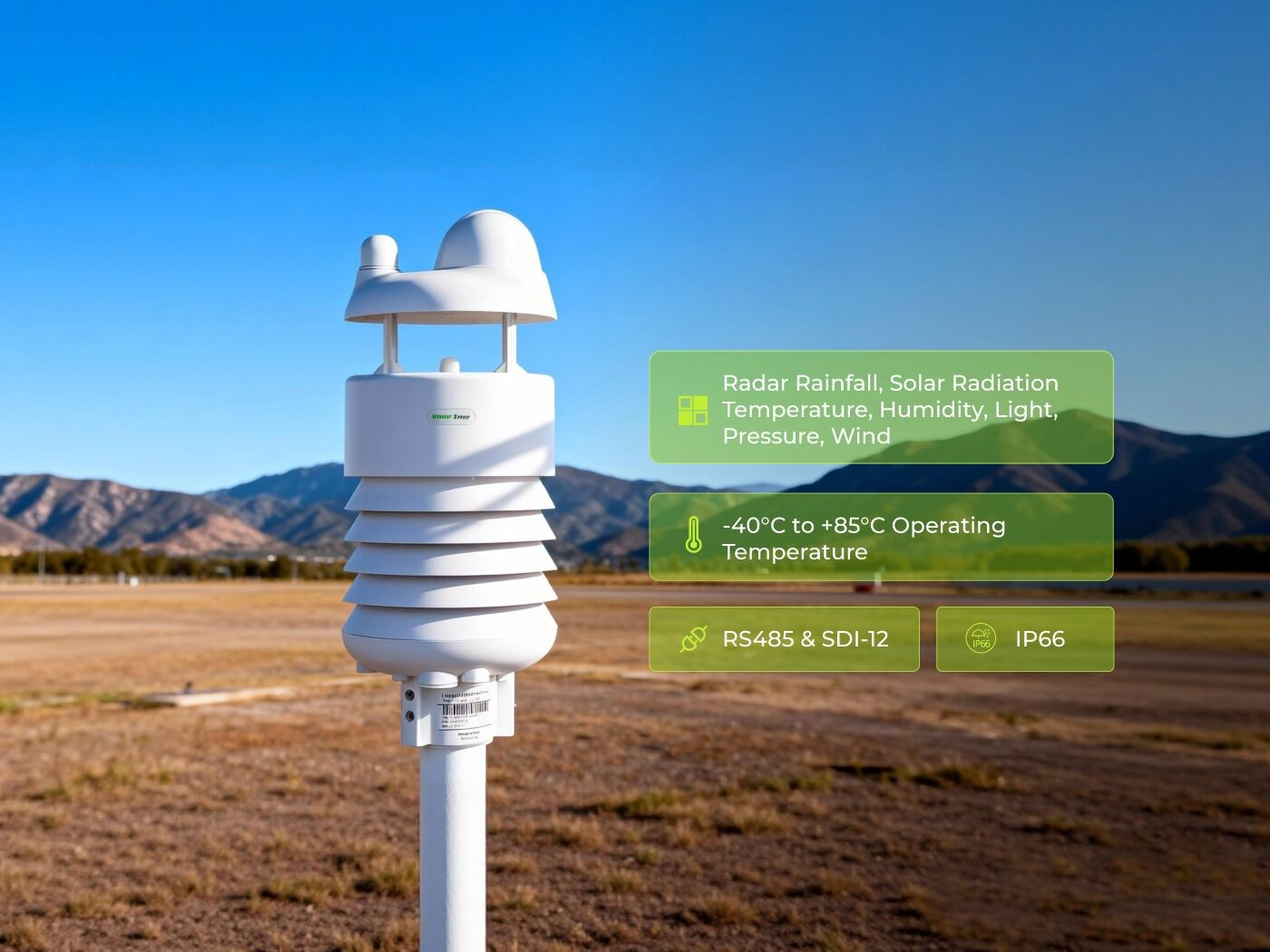
7-in-1 Weather Environmental Sensor (101991050)
Industrial 7-in-1 weather station, RS485/SDI-12 output
Integrates ultrasonic wind speed/direction, radar rainfall, light, temperature/humidity/pressure, and total solar radiation; 12–24V DC powered, IP66 integrated protection, used for weather multi-parameter bus parsing practice.
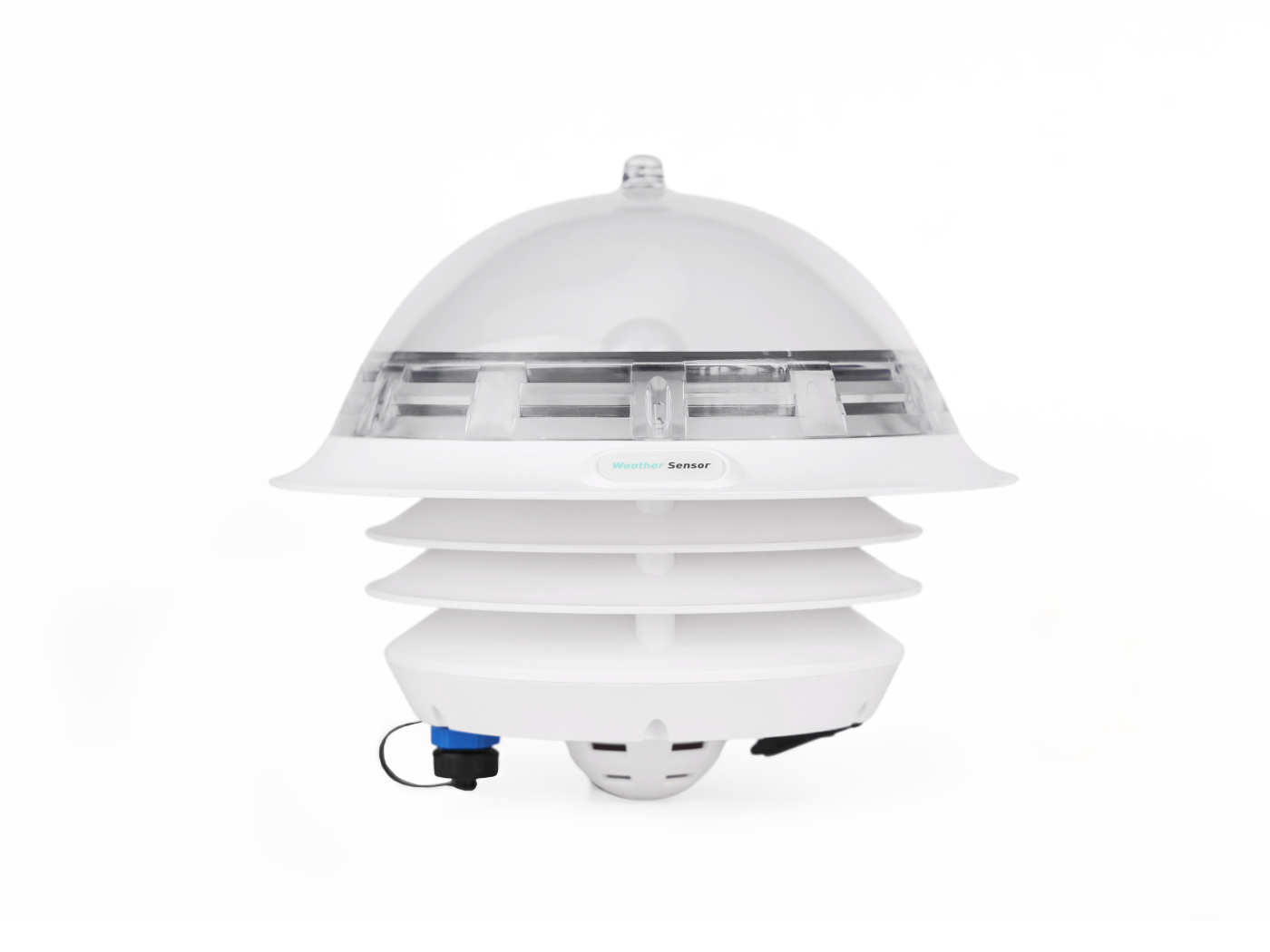
Yunxiaoguo Multi-Parameter Agricultural Monitor (114993122)
Integrated micro-weather agricultural monitor, RS485 output
Compact integrated monitoring of air temperature/humidity, illuminance, and CO2; 12V DC powered, agricultural outdoor protection rating, used for agricultural multi-parameter acquisition teaching comparison and expansion testing.
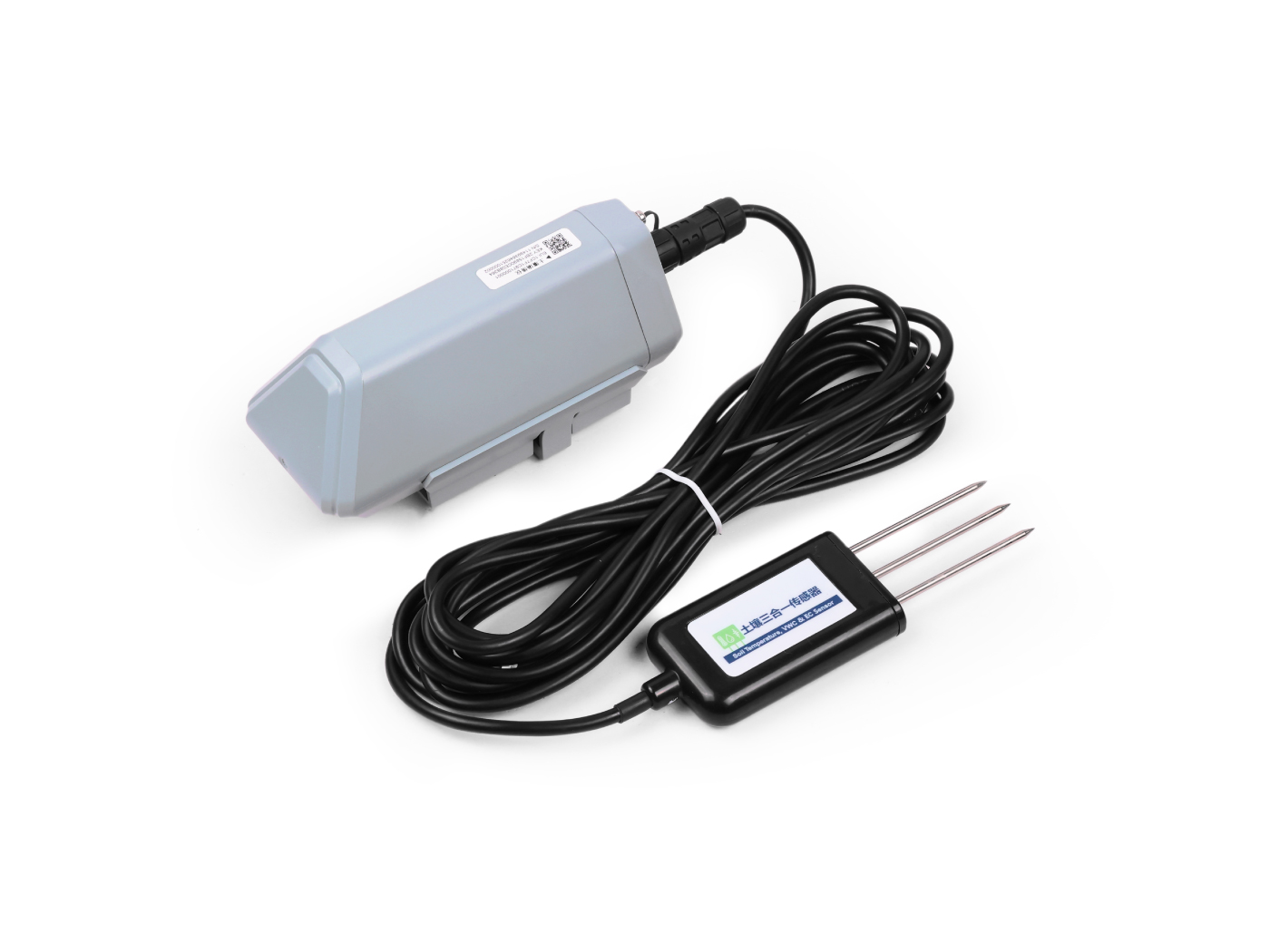
4G Soil Moisture Monitor (114993646)
Tube-type multi-layer soil monitor, built-in 4G and solar
Wiring-free continuous deep soil moisture and temperature monitoring; solar + lithium battery self-powered, IP68 rated, 4G full-network wireless direct transmission, suitable for unattended field soil moisture monitoring.
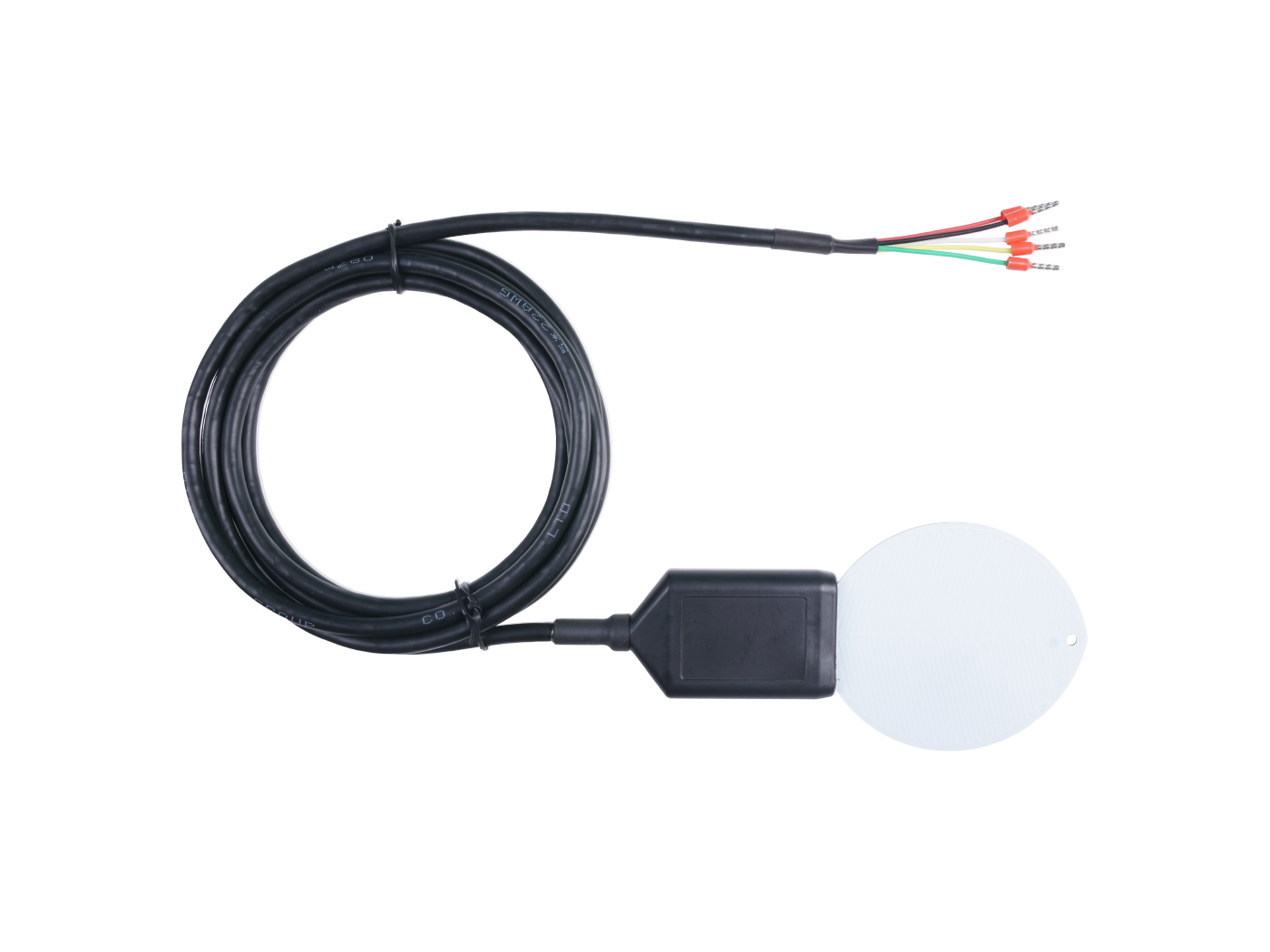
Leaf Wetness & Temperature Sensor (314990737)
Bionic leaf-surface temperature/humidity monitoring probe, RS485 interface
Monitors leaf surface temperature/humidity and leaf wetness duration; 5–24V DC powered, IP67 rated, used for crop leaf microclimate monitoring and disease early-warning experiments.
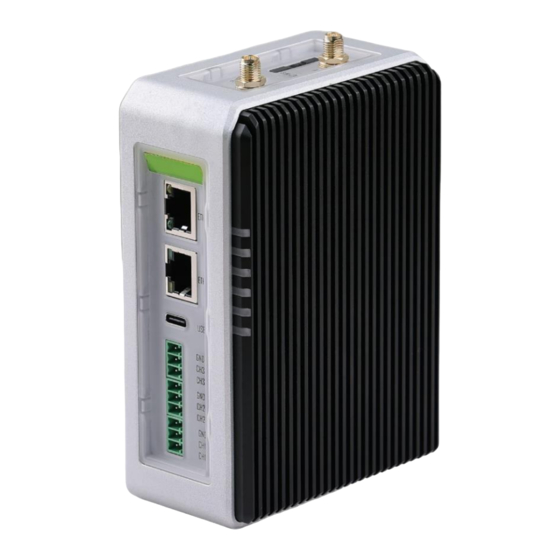
reComputer R1025-10(113991274)
Local automation host, running Node-RED and API integration
Edge intelligence controller with isolated RS485 and dual Ethernet ports; deploy Node-RED via the official installation script, access http://[device IP]:1880 for local automation orchestration, implementing threshold judgment and actuator联动; 12V/2A independent power supply.
Additionally configured with SenseCAP Outdoor Gateway (114992982), SenseCAP S2100 Data Logger (114992872), SenseCAP S2105 soil sensor (114992871), SenseCAP S2103 CO2/temperature-humidity sensor (114992869) and other LoRaWAN route hardware (images pending), as well as 4G IoT SIM card, screen, integrated power design, router, and other common accessories.
Codecraft helps you dare to make, aily-blockly helps you finish it
M0 adopts dual-platform relay toolchain for zero-install, 5-minute results.
SenseCAP Sensors + SenseCraft Data
Industrial Sensors Out-of-Box Access · Cloud SaaS Dashboard
- Sensor Wiring
- 4G Data Logger/Gateway Binding
- Cloud Real-Time Data & Reports
Modbus RTU + RS485 Bus
Register Mapping Configuration · Multi-Sensor Parallel & Alert Orchestration
- RS485 Differential Wiring
- Slave Address & Register Configuration
- Multi-Level Threshold Alert Strategy
SenseCAP Open API + Node-RED + Grafana
REST API Data Extraction · Local Threshold Linkage · Private Dashboard
- Open API Authentication & Telemetry Extraction
- Node-RED Local Automation Orchestration
- InfluxDB+Grafana Private Dashboard
Additionally requires 4G IoT SIM card (carrying cellular data backhaul), SenseCraft App (mobile device binding and alert push), InfluxDB time-series database (L3 private data storage).
Three-tier Progression: Demo → Consultant → Design
Environmental Sensing Network Architecture and Data Monitoring
Achieve wiring-free wide-area sensor monitoring, view environmental data immediately after device power-on
- Understand the different topologies and applicable conditions of 4G DTU and LoRaWAN gateways in IoT data acquisition
- Proficiently use the SenseCraft Data web and mobile apps to view multi-dimensional environmental parameters and historical trend curves
- Understand the measurement principles and deployment considerations of typical industrial sensors for soil, water quality, and weather
Sensor Wiring, Modbus Configuration, and Rule-Based Alerts
Own a Personalized Unified Sensor Data Dashboard, Auto-Alert on Anomalies
- Master RS485 differential wiring, 5V/12V power distribution, and Modbus RTU register addressing configuration
- Proficiently complete device binding and polling interval setup for the 4G data logger (or LoRaWAN gateway)
- Configure 3+ types of business alert strategies (temperature upper-limit alarm, low soil moisture alert, device offline notification)
API Data Integration and Local Edge Automation
Open up data interfaces, seamlessly integrate on-site monitoring data into own systems
- Master SenseCAP Open API authentication (Access ID / Access Key, HTTP Basic Auth) and telemetry data extraction API calls
- Deploy Node-RED on reComputer R1025 to orchestrate local automation control flows, triggering actuators based on sensor values
- Ingest environmental time-series data into InfluxDB and Grafana, design a private data monitoring dashboard
Curriculum / 13 teaching modules
Same module order, you choose the cut
Select a format to see which modules it covers.
| Module / Output | Taster1 day | Workshop2–3 days | Bootcamp3–5 days | ||
|---|---|---|---|---|---|
| 01 | Pre-class Preparation and Environment Pre-checkHardware bench inventory (4G data logger/sensor/R1025), IoT SIM card activation, SenseCraft Data account initialization, teaching material distribution | — | Full | Full | Full |
| 02 | Environmental Sensing Network Architecture Analysis4G direct architecture (RS485 sensor → 4G data logger → cloud platform) vs LoRaWAN architecture (wireless node → outdoor gateway → cloud platform → edge host) dual-topology comparison and selection criteria | SenseCraft Data | Full | Full | Full |
| 03 | Sensor Measurement Principles & Typical ScenariosSoil moisture/temperature/EC measurement principles and moisture monitoring; 7-in-1 weather station construction; agricultural multi-parameter sensing and leaf wetness/temperature probe deployment key points | — | Full | Full | Full |
| 04 | SenseCraft Data Platform Data MonitoringWeb console: device management, real-time data cards, historical trend line charts and geographic point mapping; mobile SenseCraft App scan-code device binding and status/real-time data viewing | SenseCraft Data / App | Full | Full | Full |
| 05 | Data Report Export & Mobile OperationsHourly/daily/monthly aggregated data export (CSV/Excel format) and historical archiving; mobile alert message center operation demo | SenseCraft Data | Partial | Full | Full |
| 06 | RS485 Sensor Wiring Hands-OnAviation plug pin definition (VCC/GND/RS485-A/RS485-B), sensor power supply matching (5V/12V DC), multi-sensor parallel (RS485 splitter) and slave address (Slave ID) anti-conflict settings | RS485 / Wiring Tools | None | Full | Full |
| 07 | Data Logger Configuration & Platform Binding4G data logger device EUI and Key binding, channel naming, sampling interval and upload period settings; LoRaWAN gateway network entry and node binding process | 4G Data Logger / SenseCraft Data | None | Full | Full |
| 08 | Modbus RTU Register Mapping ConfigurationData logger and sensor Modbus register mapping table configuration (start address, read length, data type parsing and scaling factor); register read debugging and data verification | Modbus RTU | None | Full | Full |
| 09 | Multi-Level Business Alert Rule ConfigurationThreshold alerts (soil temperature <5°C frost warning, ambient temperature >35°C high-temp ventilation warning); mutation and trend alerts; device operational status alerts (data logger offline/sensor offline/low battery); notification channel configuration (App push/email/Webhook) | SenseCraft Data Alerts | None | Full | Full |
| 10 | SenseCAP Open API CallingCreate Access ID and Access Key on the SenseCraft Data platform, HTTP Basic Auth authentication; write HTTP requests to obtain latest telemetry data, historical time-series data and device online status; JSON message field parsing and data cleaning | SenseCAP Open API | None | None | Full |
| 11 | reComputer R1025 Local Automation OrchestrationDeploy Node-RED on R1025 via official installation script; write automation flow: scheduled polling/HTTP request to pull cloud data, judge environmental thresholds; issue control commands via RS485 channel (trigger relay/open irrigation valve) | Node-RED / reComputer R1025 | None | None | Full |
| 12 | Time-Series Database & Grafana Dashboard IntegrationWrite environmental sensing data into InfluxDB time-series database; import Grafana dashboard template, configure multi-zone environmental comparison dashboard and private data monitoring | InfluxDB / Grafana | None | None | Full |
| 13 | Solution Review and Delivery SummaryField sensor deployment anti-interference/waterproof rating (IP66/IP68) and lightning protection specification retrospective; power budget calculation (solar panel wattage and battery capacity ratio); solution deliverables and API interface specification document archiving | — | Partial | Full | Full |
● Full◐ Partial— None●+ Extended
The coverage key maps to course format IDs (taster / workshop / bootcamp), with values of full (complete coverage) / part (abbreviated coverage) / none (not included) / plus (deeper than full version). The taster session focuses on L1 platform architecture awareness and cloud data monitoring, excluding RS485 wiring and API integration; the workshop covers full L1+L2 sensor wiring, Modbus configuration, and alert orchestration; the bootcamp fully covers L1+L2+L3, including SenseCAP Open API integration and Node-RED local automation.
Pick the layer, then the format
Time and goals determine which layer to choose.
Taster Session
No FP1 day · 6–8h · L1 presentation layer · focusing on dual communication architecture awareness and cloud data monitoring
- Day 1 MorningModules 01 + 02 + 03
Environment pre-check → Dual communication architecture analysis → Sensor measurement principles and scenarios
- Day 1 AfternoonModules 04 + 05 + 13 (abbreviated)
SenseCraft Data platform monitoring → Report export and mobile operations → Summary review
The taster session goal is "understand, explain, and demonstrate" — achieve the demo effect of multi-node sensor data to cloud and real-time dashboard in 3 minutes. Does not include RS485 wiring, Modbus configuration, or API integration.
Hands-On Course
Full FP2–3 days · 14–20h · L1+L2 · sensor wiring + Modbus configuration + multi-level alert orchestration
- Day 1Modules 01–05
Environment pre-check → Dual communication architecture → Sensor principles → Cloud data monitoring → Report export
- Day 2Modules 06–09
RS485 wiring hands-on → Data logger configuration and binding → Modbus register mapping → Multi-level alert rule configuration
- Day 3 (optional)Module 13
Solution Review & Delivery Summary (Including Deployment Specifications & Power Budget)
The workshop delivers one RS485 physical wiring setup with 2+ sensor types, one Modbus register mapping table, and at least 3 types of business alert strategies. Student prerequisite: ability to read sensor wiring diagrams, RS485/Modbus or electronic wiring fundamentals.
Delivery Course
Full FP3–5 days · 24–35h · L1+L2+L3 · full coverage including SenseCAP Open API integration and Node-RED local automation
- Day 1–2Modules 01–09
Full L1+L2 content (architecture awareness + cloud monitoring + RS485 wiring + Modbus configuration + alert orchestration)
- Day 3Module 10
SenseCAP Open API Authentication & Telemetry Data Extraction Hands-On
- Day 4Module 11
Node-RED Local Automation Control Flow Development on reComputer R1025
- Day 5Modules 12 + 13
InfluxDB+Grafana private dashboard → Solution review and delivery archiving
The bootcamp goal is the ability to independently deliver environmental monitoring systems and API data integration. Student prerequisite: HTTP API calling, JSON parsing, and Linux command-line fundamentals, familiarity with L1–L2 competencies.
The taster session is the standard format for solution demos and client communication: zero wiring barrier, 1-day closed loop, focusing on "sensors can connect, data can go to cloud, dashboard can be seen." Suitable for exhibitions, technology open days, and initial client contact scenarios.
Workshop Day 3 is an optional flexible day: if students have a strong foundation, it can be compressed to 2 days (Day 2 afternoon merged with review and delivery summary); if more alert strategy tuning and wiring troubleshooting time is needed, use the full 3 days.
4G data logger and sensor power supply involves 12V/24V DC circuits; power adapter specifications must be confirmed to match sensor power requirements (5V/12V/24V DC) to avoid overvoltage damaging sensors or undervoltage causing abnormal readings. Students must have instructors confirm correct wiring before powering on.
RS485 bus wiring requires attention to A/B wire order and termination resistor matching; when multiple sensors are connected in parallel, expand via splitter and set unique slave addresses (Slave ID) to prevent conflicts; when bus length exceeds 10 meters, a 120Ω termination resistor is recommended at the end, otherwise communication packet loss or register read failures may occur.
4G version requires confirmation of on-site cellular signal strength; basement or deep mountain scenarios require external high-gain antennas; each data logger requires a valid IoT data SIM card. LoRaWAN version requires evaluation of line-of-sight coverage between gateway and nodes; long-term field nodes require matching solar panels and high/low-temperature environment batteries.
The taster session does not include RS485 wiring or Modbus configuration content. Do not promise clients that taster session students can independently complete sensor physical wiring — that is the workshop delivery standard.
Who This Course Is For
The value of this course is not in the sensor hardware, but in the method of "integrating wide-area dispersed environmental data"
M5 is not a course that teaches students to "look at a few sensor readings," but a methods course teaching teams how to use industrial-grade sensors and dual communication links to centrally integrate those dispersed, hard-to-wire environmental data in the field, farmland, river channels, and municipal pipeline networks. What Chaihuo delivers is never just "one class session," but a complete set of things that can be taken apart, rewritten, and reassembled: 13-module course skeleton, teacher lesson plans and PPT, Modbus register mapping tools, sensor wiring diagram templates, alert strategy configuration checklists, API call sample code.
Opening 01
Change the Scenario
The thresholds of Module 09 "Multi-Level Business Alert Rule Configuration" are open: your industry, your client site, a real problem happening in this city. Soil temperature below 5°C can be frost warning, cold storage, or aquaculture greenhouse — the closer the problem is to a real site, the better the effect, and you know this better than we do.
Opening 02
Connect Sensors
Your existing client legacy sensors, environmental probes on school training benches, and partner RS485 devices can be connected after Module 06 to become the object pool for Modbus integration practice. M5 is responsible for explaining the method thoroughly; what sensors to connect behind the door is up to you.
Opening 03
Add Your Own
What you have accumulated in the industry: field deployment experience, pitfalls encountered, the analogy that makes students instantly understand LoRaWAN line-of-sight coverage, the three questions most commonly asked at client sites — those are precisely the parts we do not have and cannot provide.
The best destiny of an environmental monitoring course is not to be executed in full once, but to be modified beyond recognition by an engineer and then become the solution that only he can deliver.
Scope Boundaries & Compliance
Core Principles
4G and LoRaWAN are two independent delivery routes, hardware is not mixed; environmental data belongs to low-frequency IoT monitoring, not millisecond-level closed-loop control.
In Scope
- Multi-environmental-parameter collection (soil temperature/humidity/EC, weather 7-parameter, CO2, leaf wetness/temperature, water quality pH, etc.) and wide-area dispersed point monitoring
- Selection, deployment, and data backhaul for two communication architectures: 4G cellular direct (domestic) and LoRaWAN wide-area wireless (overseas/wiring-free)
- SenseCraft Data cloud real-time dashboard, historical trend analysis, data report export (CSV/Excel) and multi-condition threshold alert configuration
- SenseCAP Open API data extraction (HTTP Basic Auth, Access ID/Access Key authentication) and third-party business system one-way data integration
- reComputer R1025 edge Node-RED local threshold linkage control (issuing low-voltage actuator commands such as relay/irrigation valve via RS485)
- InfluxDB Time-Series Database Storage & Grafana Private Data Monitoring Dashboard Deployment
Out of Scope
- 4G and LoRaWAN hardware are not mixed: the two routes are independent delivery kits; the 4G data logger (114992169) and LoRaWAN gateway (114992982)/S210x nodes belong to different communication protocol stacks and must not be mixed-networked or cross-replaced in the same teaching bench
- Data sovereignty and private deployment boundaries: SenseCraft Data is a cloud SaaS platform, environmental data is stored on Seeed cloud by default; L3 extracts data to local InfluxDB via Open API for private storage, but raw data still first transits through the cloud; pure offline/network-available local data collection services are not provided. Private deployment only covers L3-stage API-pulled data, not private deployment of the cloud platform itself
- Not applicable to millisecond-level closed-loop motion control: environmental sensing sampling period is typically 1–60 minutes (depending on on-site power consumption and battery strategy configuration), belongs to low-frequency IoT monitoring, does not perform high-frequency servo vibration monitoring, not applicable to millisecond-level closed-loop motion control or real-time servo systems
- Strictly prohibited from intervening in the monitoring and control of safety-critical life systems such as fire protection, elevator control, and high-voltage power distribution
- Does not include large-area civil construction and high-altitude lightning protection engineering implementation
- Does not include protocol cracking services for third-party legacy sensors without open protocols
- Does not promise force majeure damage exemption for sensor hardware caused by extreme natural disasters (submersion, lightning strike)
- Control scenarios are limited to low-voltage DC actuators issued via RS485 (relay modules, irrigation valve solenoids, etc.); directly controlling AC 220V and above high-voltage loads through this system is strictly prohibited
- Sensor measurement accuracy is affected by physical environment such as installation depth, soil compaction, and electrode surface cleanliness; regular maintenance and calibration are required, absolute measurement accuracy in specific scenarios is not promised